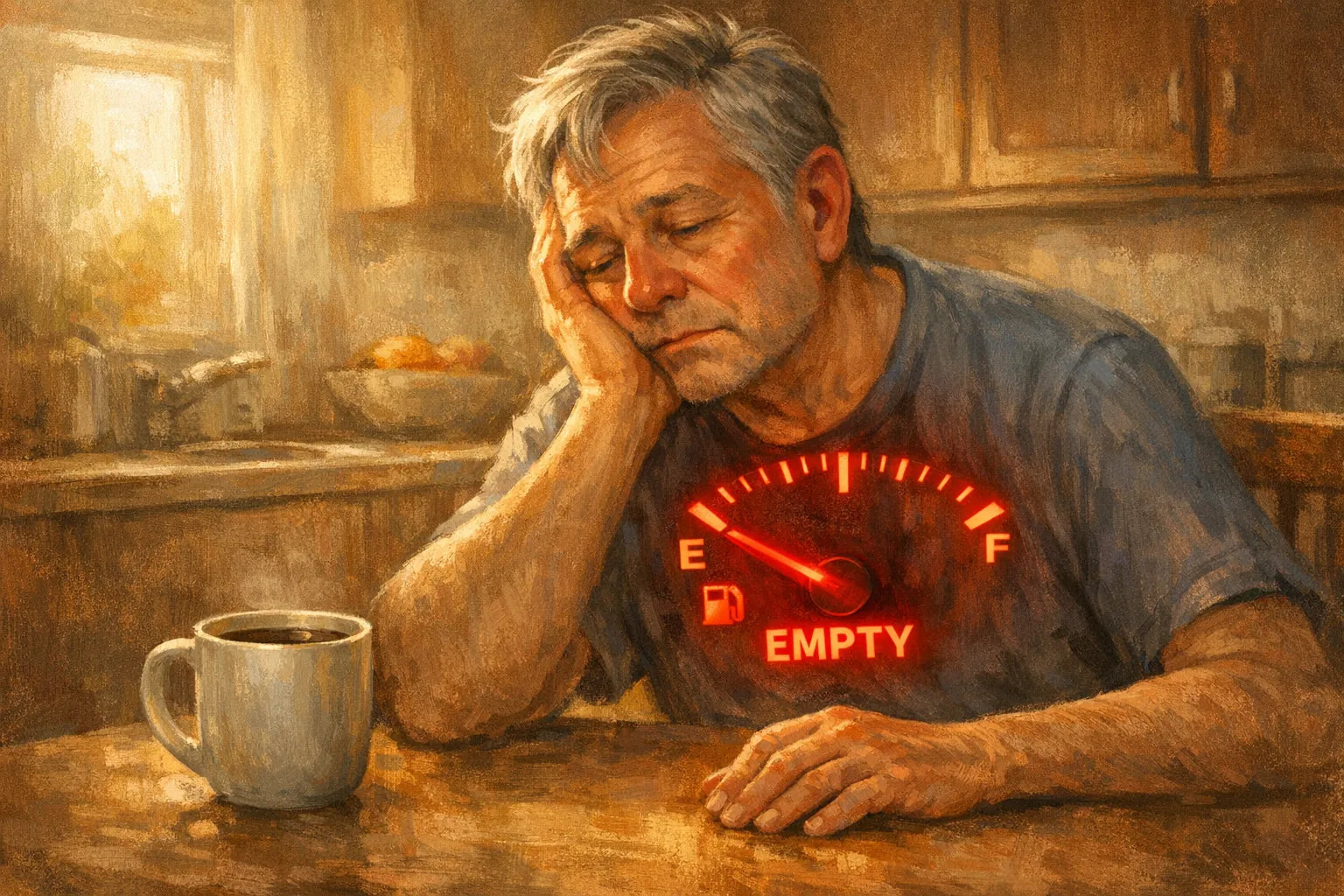
"I slept nine hours last night. So why am I dead on my feet AGAIN by 2pm?"
The "Dead Tired Enzyme" That Quietly Turned Your Coffee Against You After 50
Nothing is wrong with you.
One enzyme in your liver slowed down, and it changed what every single cup of coffee does to your body.
Here's why you're dead tired by mid-afternoon, and why the same cup that carried you at 35 now robs tonight's sleep and pays you back almost nothing...
Plus the 4 old-world plants that help your body build its own energy instead of borrowing tomorrow's... with no caffeine, no jitters, and nothing to crash from...
So you can say yes to the trip the day somebody asks, instead of saying "let me see how I'm feeling."
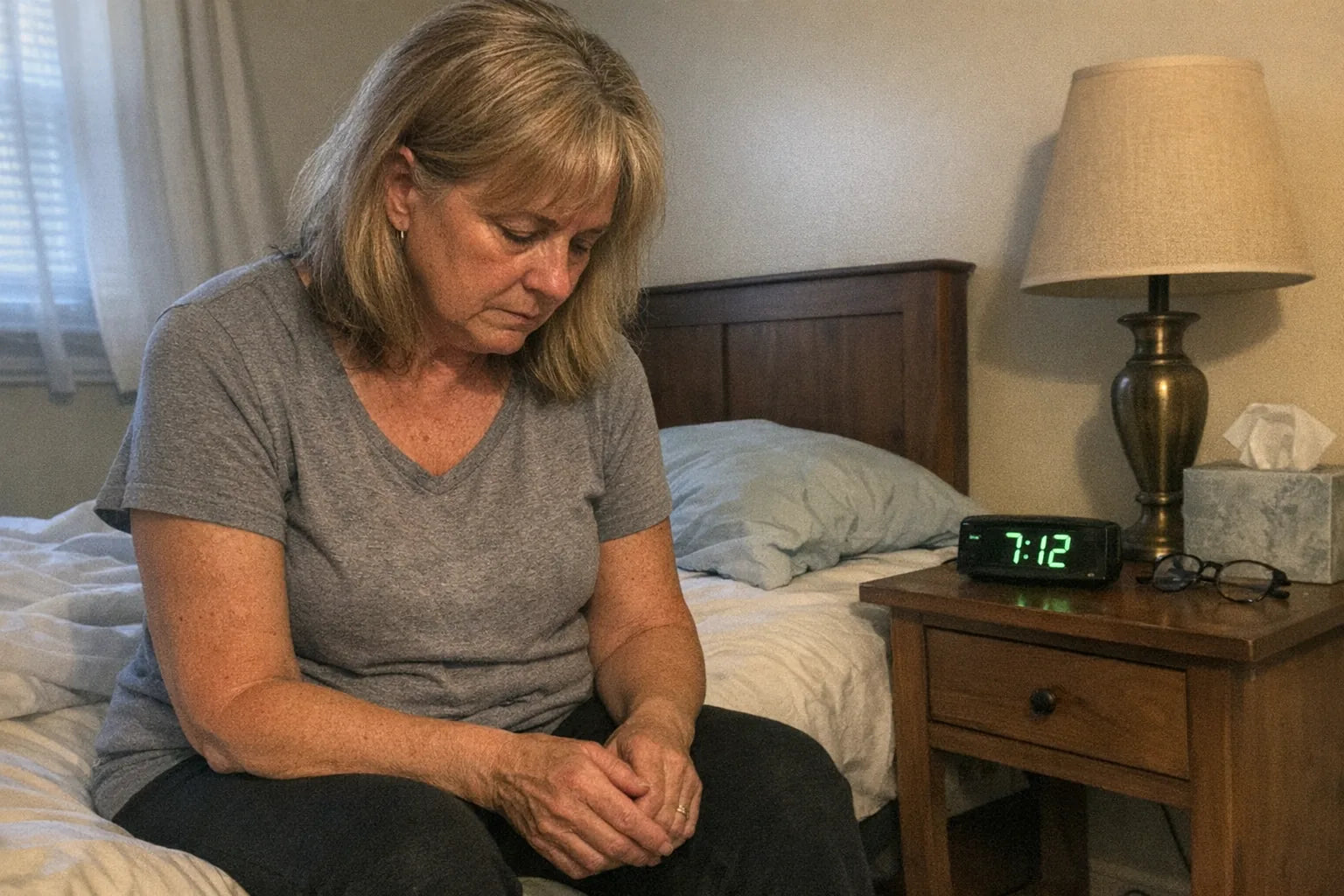
You did everything right last night.
You were in bed by ten.
You slept, or at least you were horizontal with your eyes shut for nine hours.
And you still woke up feeling like you'd been dragged behind a truck.
So you did what you've always done.
You made the coffee.
And by two o'clock this afternoon, you're right back here, staring at a screen or a sink or a driveway, running on absolutely nothing.
Here's the part nobody has told you.
That coffee isn't failing you because you drink too much of it, or because you built up a tolerance, or because you're "just getting older."
It's failing you because one specific enzyme in your liver has slowed down.
That enzyme has one main job, and the job is to clear caffeine out of your blood.
Scientists call it CYP1A2.
I call it the dead tired enzyme, because of what happens to your afternoons when it starts running slow.
Tired Isn't A Personality. It's A Mechanism.
I want to give you that sentence before anything else, because I think you've quietly started to believe the opposite.
Somewhere in the last few years, the tiredness stopped feeling like a bad week.
The tiredness started feeling like a description of you.
The one who naps. The one who leaves early.
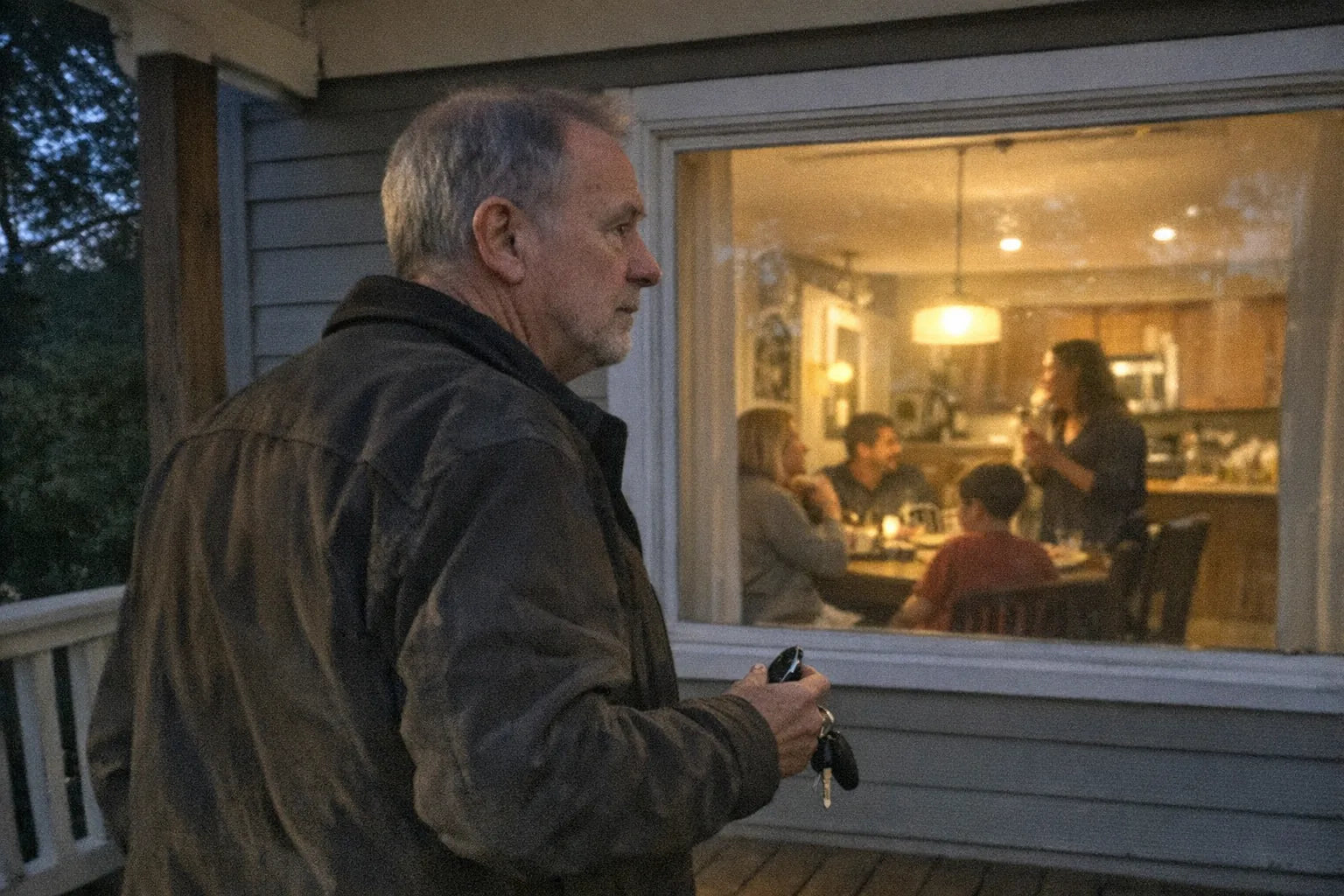
You've probably said no to something recently that you genuinely wanted to do.
Not because you couldn't afford it, and not because you didn't care.
You said no because you ran the math on your own energy and came up short.
You remember doing it, too.
Somebody asked, and for half a second your chest lifted, because you WANTED to go.
Then the calculator started running behind your eyes.
The drive, the stairs, how you'd be feeling by four o'clock with everybody else still going strong.
And you heard your own voice say, "oh, that sounds lovely, let me see how I'm feeling that week."
You both knew exactly what that meant.
Then the photos showed up on your phone a week later.
Everybody laughing on a dock in the late sun, arms around each other, somebody caught mid-story with their head thrown back.
And you sat there with your thumb frozen on the screen, feeling something you would never say out loud to a living soul.
Left out. By your own body.
Here's the part I think actually scares you, and I don't believe you've said this one out loud either.
The fear isn't about this month.
The fear is the line you can draw forward from here.
Two years ago you could still push through it, and now you can't.
So what does two years from NOW look like?
At some point the invitations just stop arriving, and not because anybody got cruel about it.
They stop because everyone already knows what you're going to say.
That's the real fear.
Not being tired, but being quietly written off by the people you love most while you're still sitting right there in the room.
I've spent a long time reading the research on why that happens to people after 50, and I need you to hear the good news buried in it.
Fatigue after 50 has a mechanism.
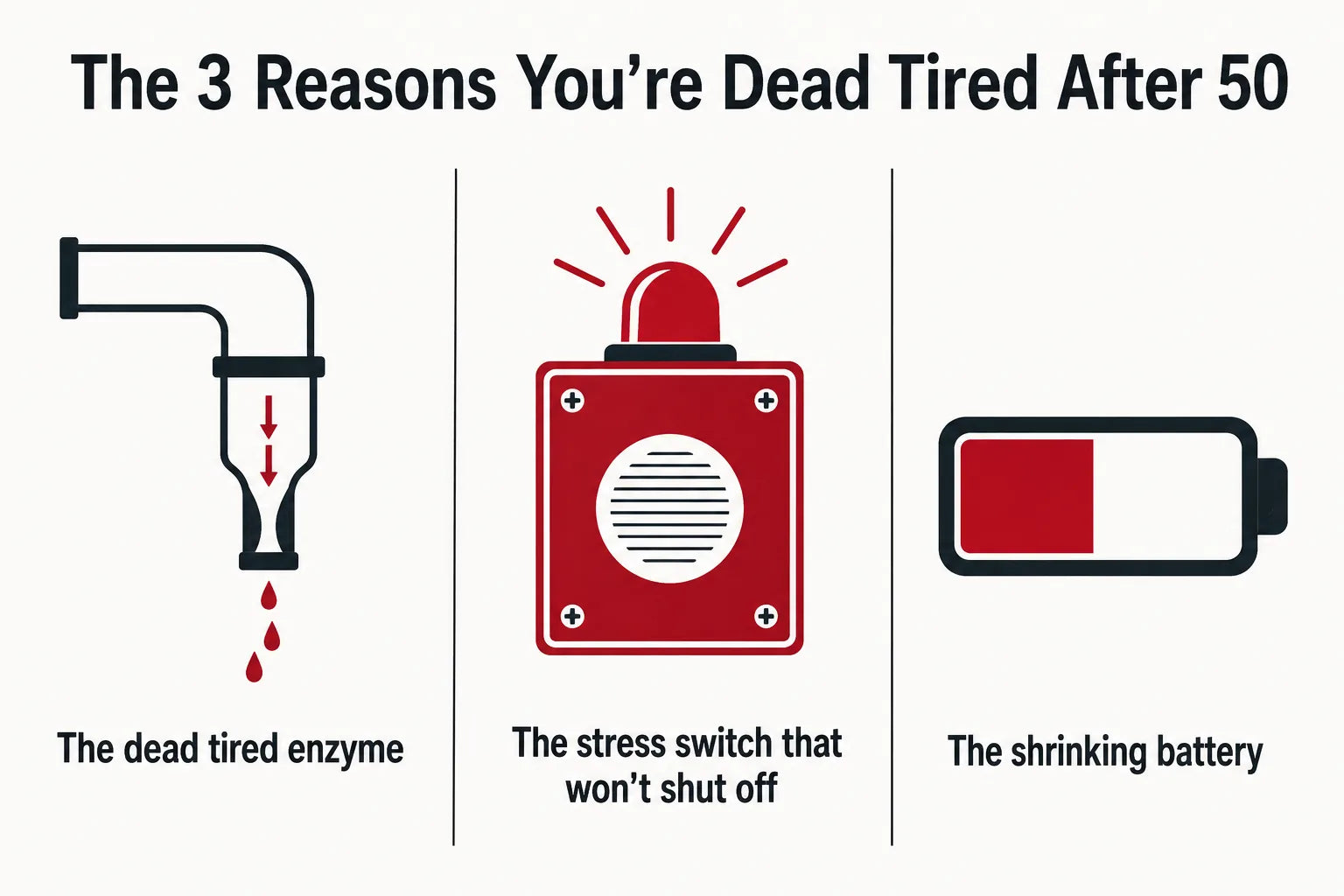
Actually it has three, and they stack on top of each other.
Mechanisms are not personalities. A personality is something you're stuck with, and a mechanism is something you can work with.
Mechanism One: The Dead Tired Enzyme
Let's start with the one you can feel today, because you've already noticed it and nobody has ever explained it to you.
Your coffee works differently now than it did at 35.
Same beans, same mug, completely different body.
Here's why.
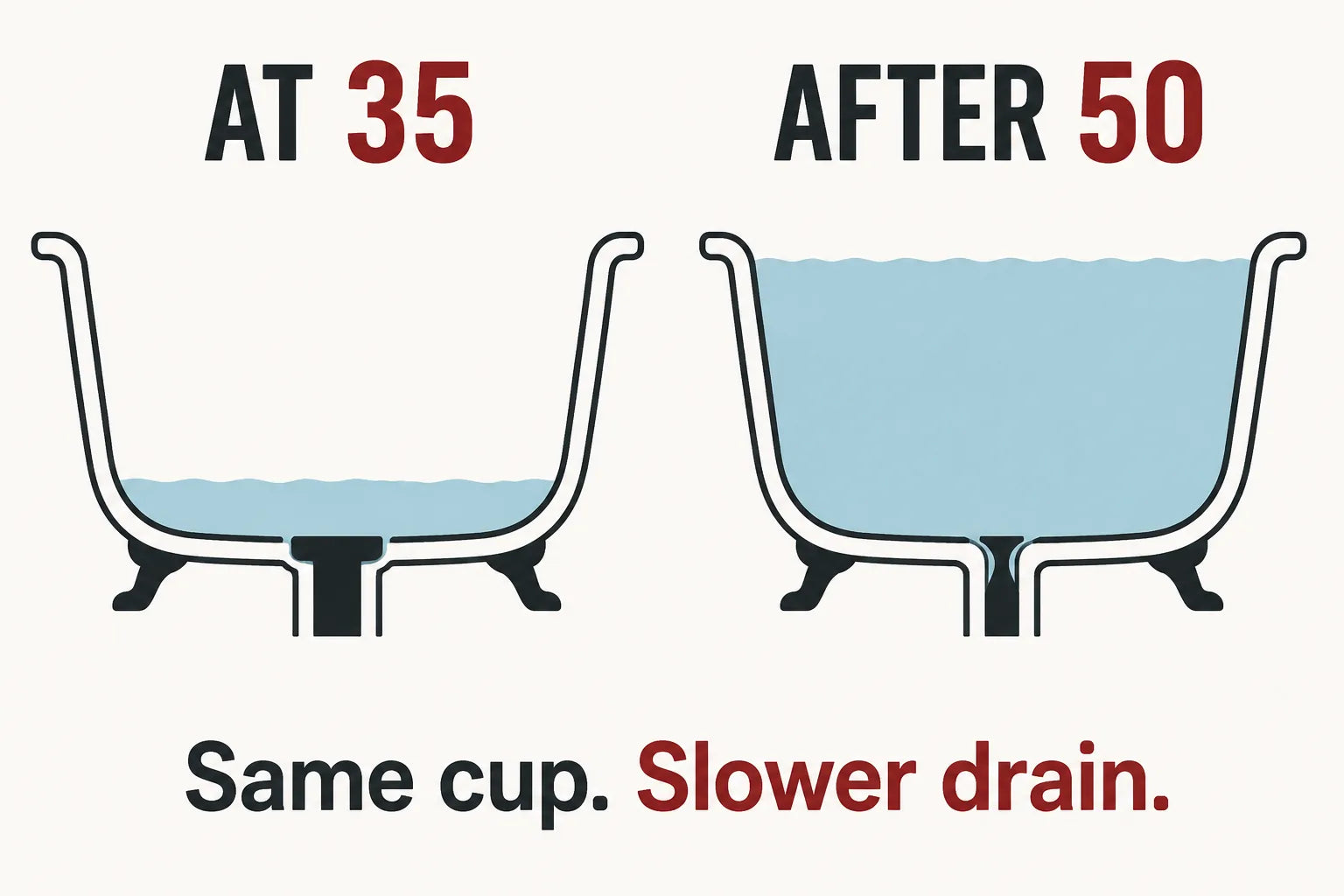
Roughly 95% of the caffeine you drink is cleared out of your bloodstream by a single liver enzyme.1
That enzyme is the drain in the bathtub.
Caffeine is the water.
When the drain runs fast, the water goes down fast, and your body is clean by dinner.
Now here's what changes.
The enzymes that break caffeine down grow less efficient as you age.2
Researchers found that coffee drinkers between the ages of 65 and 70 took 33% longer to clear caffeine out of their bodies than younger people did.2
Read that again, because it rewrites your whole afternoon.
Thirty-three percent longer.
The same cup that used to be gone by supper is now still circulating at bedtime.
And caffeine isn't just slower to leave.
Reviews of caffeine in the aging brain describe both a longer half-life AND higher sensitivity to it as you get older.3
So you're getting a bigger dose, for a longer time, from the exact same mug.
That's the dead tired enzyme.
Not a disease. Not a defect.
Just a drain that runs slower than it used to, on a body that never got the memo.
Caffeine Never Made You Energy. It Taped Over The Gauge.
Now I have to tell you the more uncomfortable half.
Even when that enzyme was running fast, coffee was never actually giving you energy.
Not one single unit of it.
Here's what caffeine really does.
All day long, your brain builds up a molecule called adenosine.
Adenosine is your tiredness gauge.
The longer you're awake, the higher it climbs, and the heavier your eyelids get.
Caffeine doesn't lower adenosine.
Caffeine parks itself in the receptors where adenosine would dock, so your brain simply can't read the gauge anymore.3 4
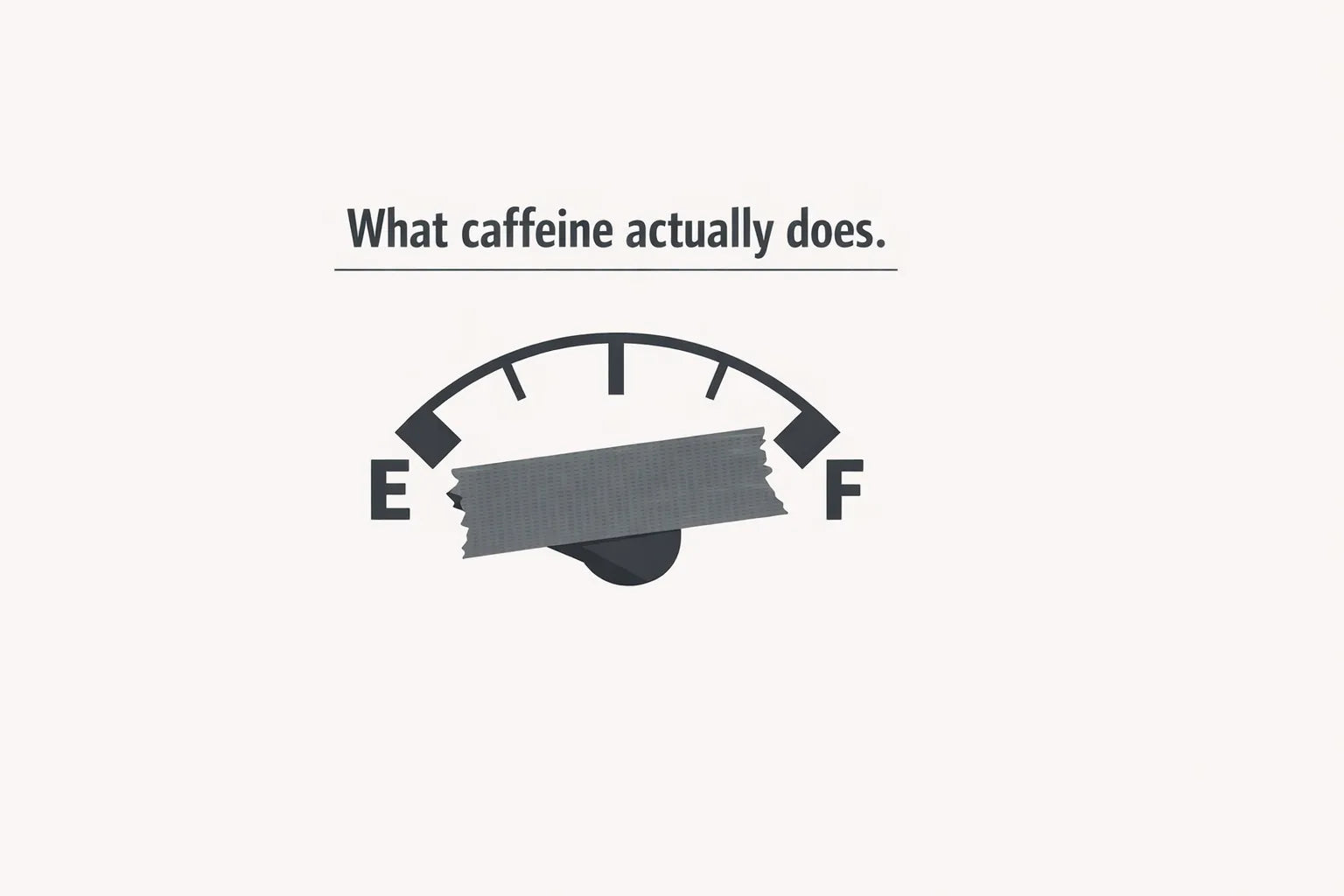
That's the whole trick.
The tank never got filled.
Somebody just taped over the gauge so you'd stop looking at it.
And here's the cruel part.
While the tape is on, the adenosine keeps piling up behind it.
Every hour you're awake, the gauge climbs higher, and you can't see any of it.
Then the caffeine wears off.
The tape comes off all at once.
And every bit of tiredness you accumulated since breakfast lands on you in a single wave.
That wave has a name in your house.
You call it two o'clock.
Caffeine Is An Energy Loan. After 50, The Interest Rate Goes Up.
This is the sentence I'd tattoo on the side of every coffee maker in America if they let me.
Caffeine is a loan.
You aren't earning energy at 7am. You're borrowing it.
And a loan has to be paid back.
At 35 the repayment was cheap, because that drain ran fast and the caffeine was long gone before your head hit the pillow.
After 50, the repayment schedule gets ugly.
Here's the bill.
A meta-analysis of 24 controlled studies found that caffeine cut total sleep time by 45 minutes and dropped sleep efficiency by 7%.5
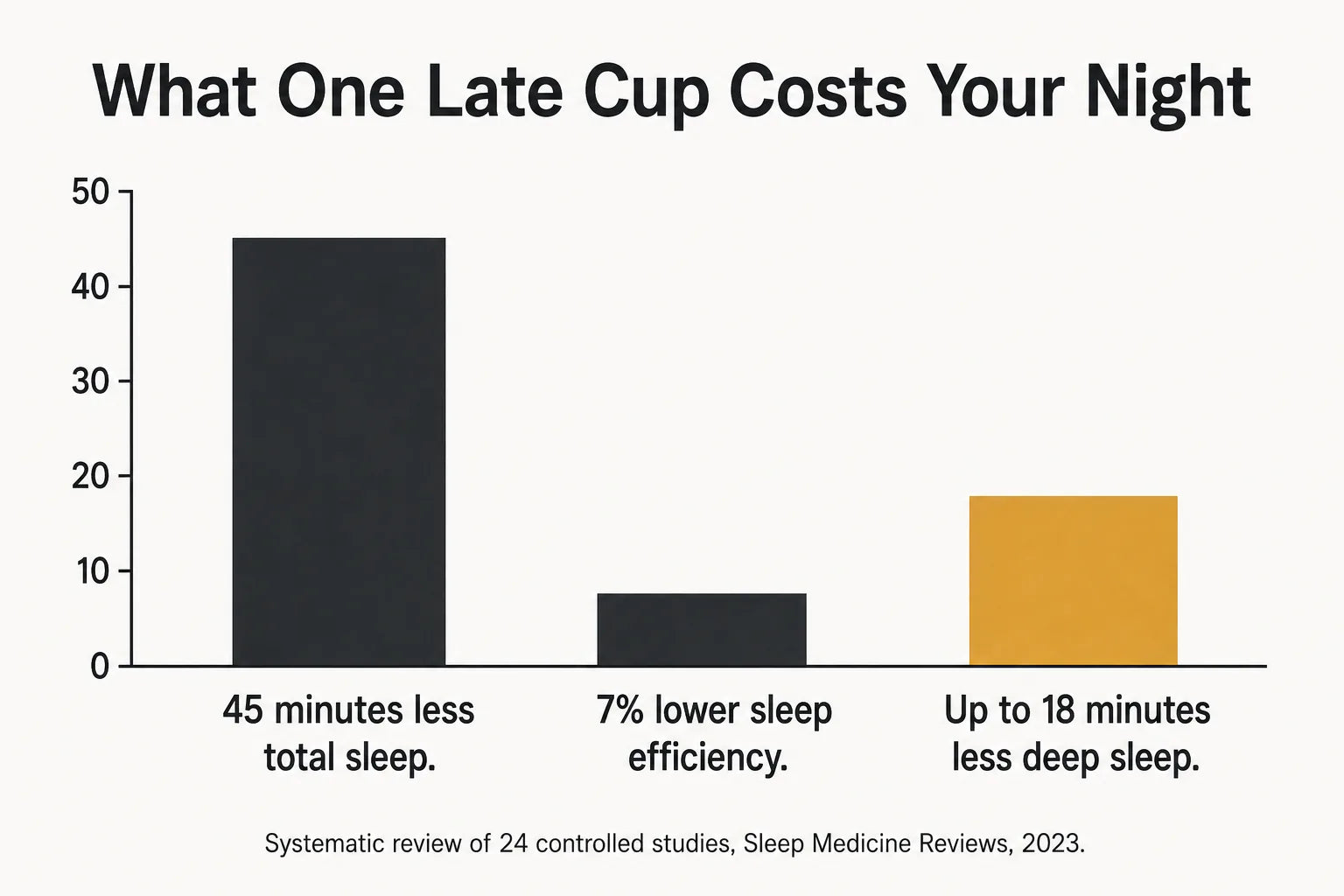
But the number that matters most for you is the next one.
The same analysis found caffeine shortened deep, slow-wave sleep by up to 18.5 minutes.5
Deep sleep is the part of the night that actually clears the day's adenosine.
It's the drain for your tiredness gauge.
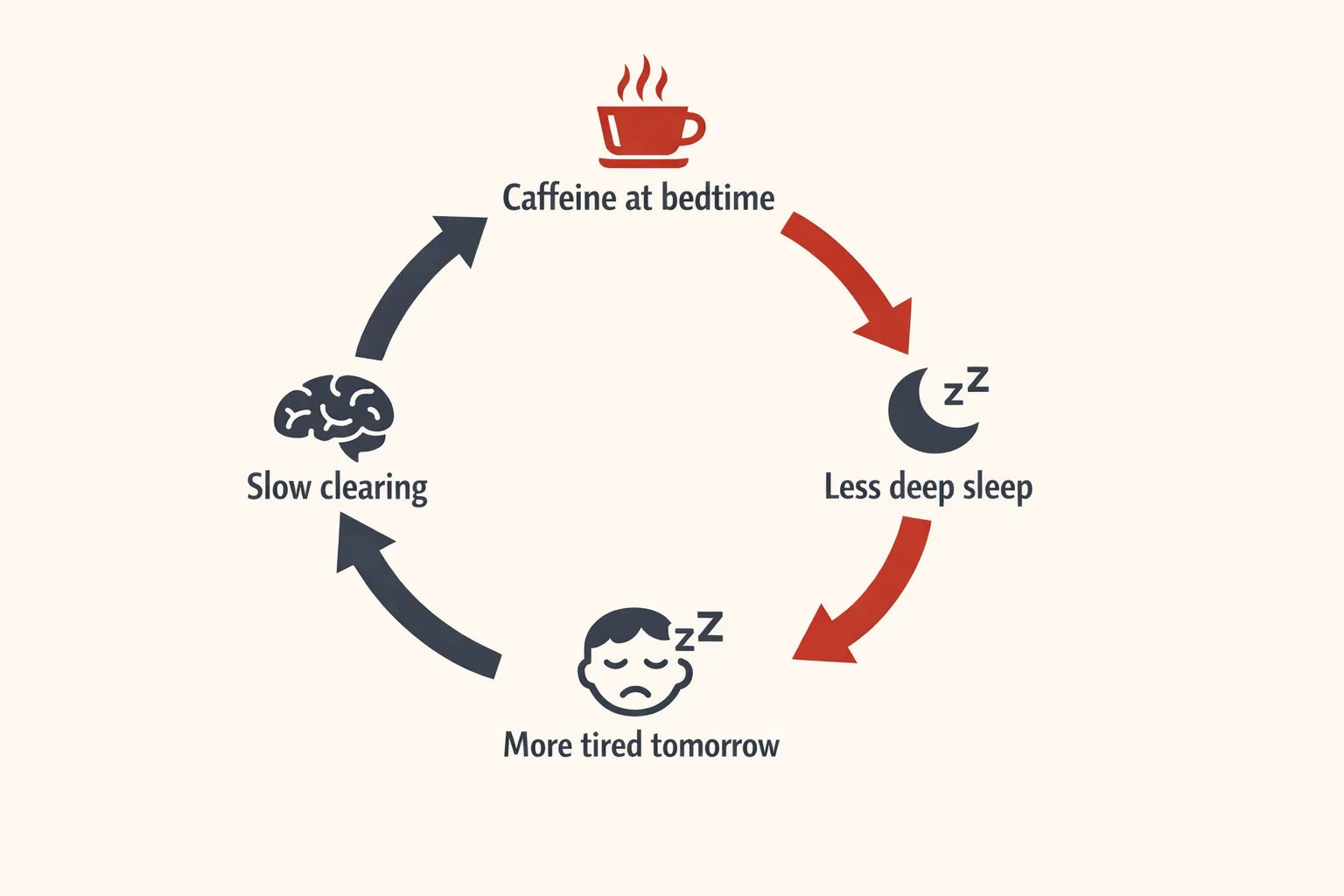
So follow the loop with me.
Slow enzyme means the caffeine is still in you at bedtime.
Caffeine at bedtime means less deep sleep.
Less deep sleep means you start tomorrow with yesterday's tiredness still in the tank.
Which means tomorrow you need a bigger cup.
Which puts even more caffeine into a body that's already clearing it 33% slower.
That's the interest rate going up.
The loan gets bigger and the payments get harder, year after year, and nobody ever tells you why.
And Then Coffee Pours Fuel On Your Stress Hormone
There's one more thing caffeine does that almost nobody talks about, and it matters enormously for the second mechanism.
In placebo-controlled work, a dose of caffeine equal to two or three cups of coffee raised cortisol by about 30% at rest, an hour after drinking it.6
Cortisol is your stress hormone.
Later research showed caffeine also stacks with mental stress to push cortisol higher still, in men and women alike.7
So the cup you drink to fight the tiredness quietly turns up the exact system that's already burning your energy in the background.
Which brings me to the part of this that finally explained my own afternoons.
Mechanism Two: The Stuck Stress Switch
Here's a question that used to bother me.
Where does the energy actually GO?
You're still eating and still breathing, so your body is still making energy every second of the day.
So why is there none left for you by two in the afternoon?
The answer is that you may not have an energy production problem at all.
You may have an energy ALLOCATION problem.
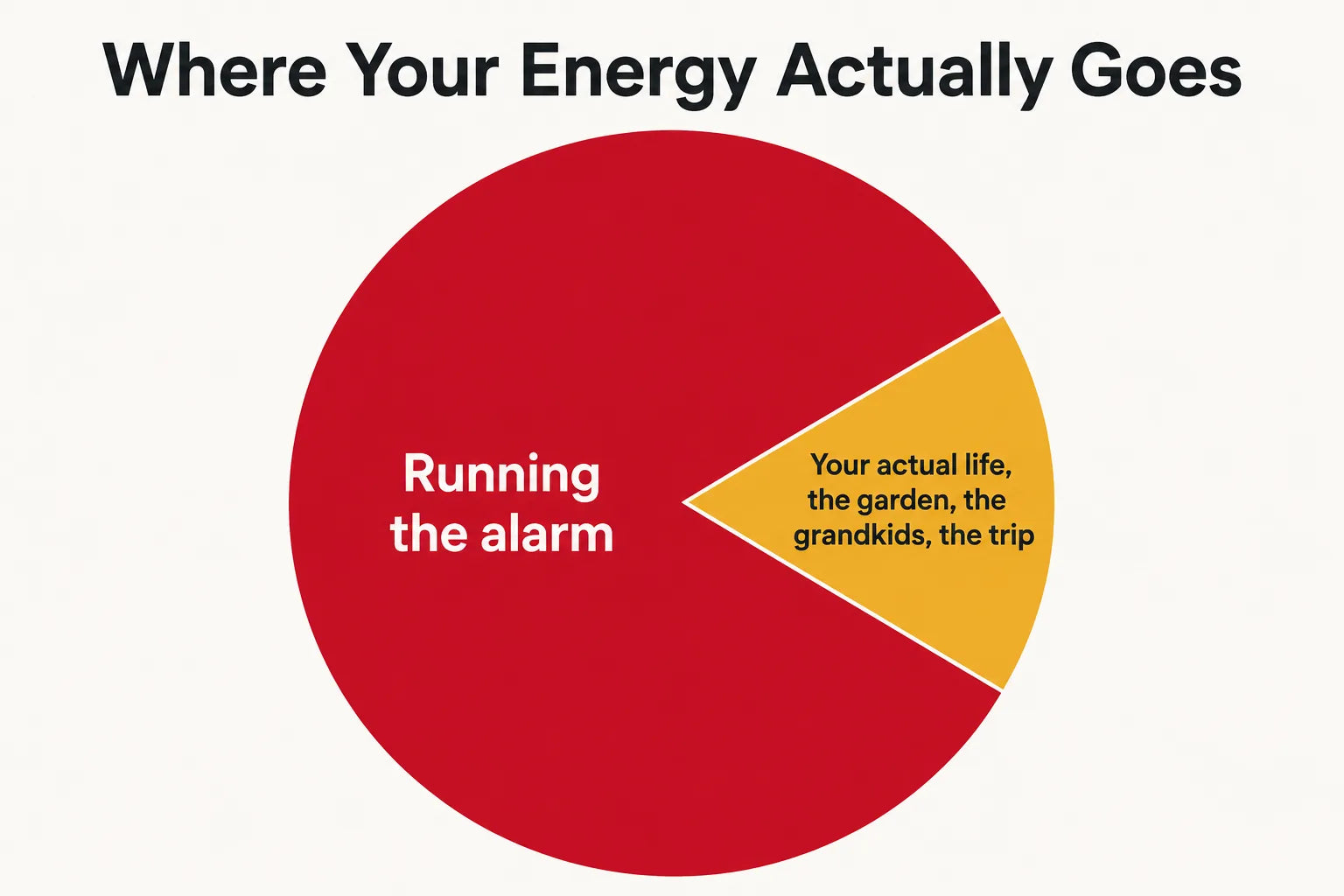
Think of your stress system as a house alarm.
It's supposed to scream when there's a break-in, then shut off when the danger is gone.
That's the design.
But after decades of real life, deadlines, illnesses, losses, caregiving, worry, that alarm can get stuck part-way on.
Nothing is breaking in.
The alarm is still running anyway.
And an alarm that never shuts off draws power every hour of every day.
That power comes out of the same budget as your walks, your hobbies, and the hour you wanted to spend on the floor with a two-year-old.
Now here's the part that gave me chills the first time I read it.
This stuck alarm leaves a fingerprint you can actually measure.
The fingerprint shows up as an abnormal cortisol response in the first hour after you wake up.
In plain words, your body dumps the wrong amount of stress hormone at sunrise.
You know this feeling better than any researcher does.
It's waking up already tired.
Not sleepy. Tired.
Nine hours in the bank and you open your eyes at empty.
Remember that measurement, because it comes back later in this article as the single best piece of evidence I have to show you.
Mechanism Three: The Shrinking Battery
The third mechanism is the simplest one, and it's the one your doctor was gesturing at when they said "well, you're getting older."
Inside almost every cell in your body sit tiny power plants called mitochondria.
They take your food and your oxygen and turn it into the actual currency your body spends, a molecule called ATP.
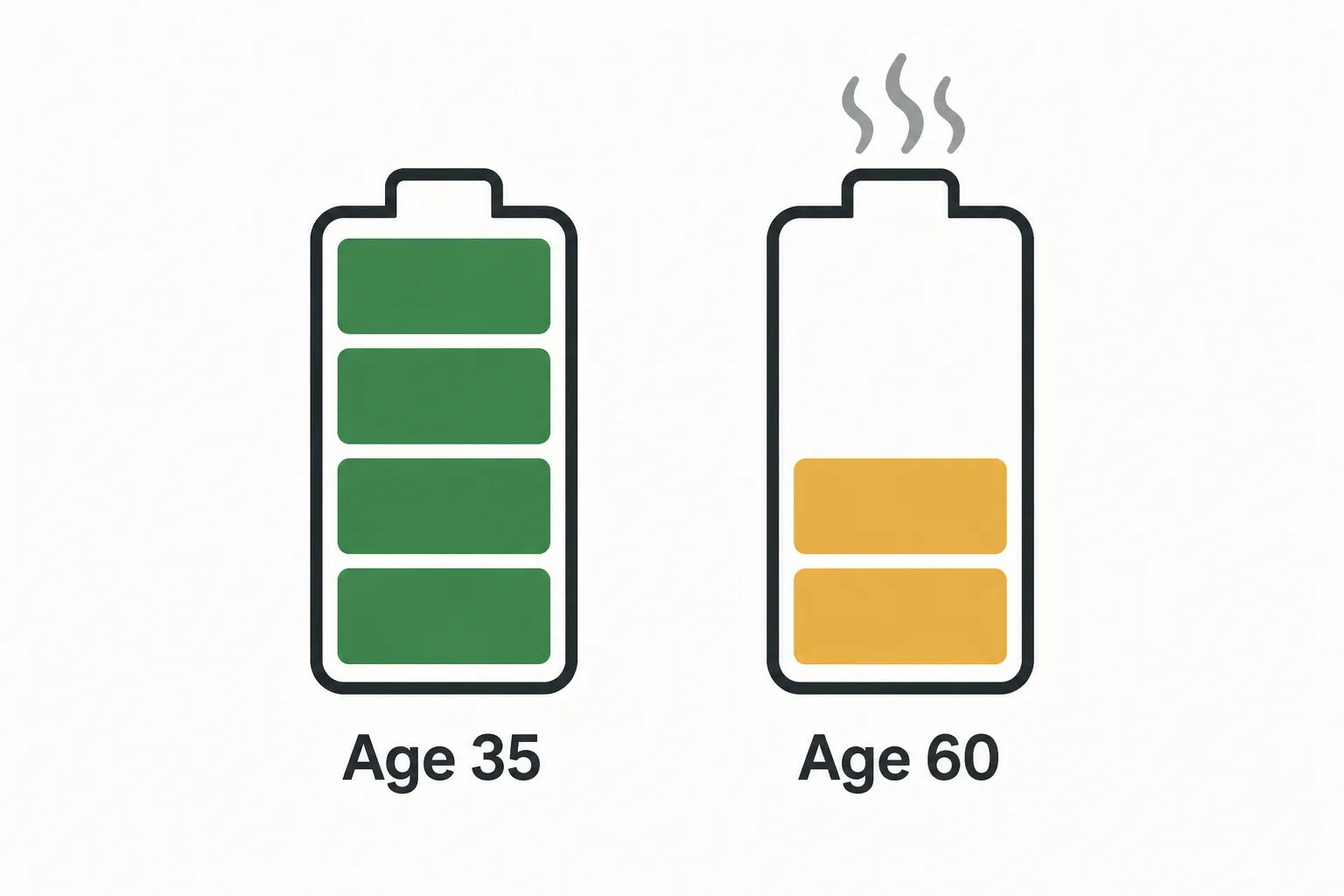
With age, those power plants make less ATP and throw off more waste as they do it.8
Less power out, more exhaust.
And this isn't an abstract lab curiosity.
When researchers measured muscle mitochondrial energetics in older adults, the readings tracked how fatigued those people actually reported feeling.9
The people whose cellular power output was lower were the people saying "I'm exhausted."
So put all three together, because this is the whole picture.
Your battery makes a little less power than it used to.
Your stuck alarm spends a chunk of what's left before you even get to choose.
And your slowed enzyme keeps caffeine in your system long enough to steal the deep sleep that was supposed to reset the whole thing.
Three mechanisms, feeding each other, every single day.
Why Naps And Nine Hours Don't Fix Any Of It
Now you can see why "just get more rest" has never worked for you.
A nap pays down a little adenosine.
That's all a nap does.
A nap doesn't touch the stuck alarm, and it doesn't do a thing for the battery.
That's why you can nap for an hour and wake up groggy, foggy, and somehow more tired than before.
Same with sleeping longer.
More hours in bed will not fix an energy problem that isn't about hours in bed.
Nine hours of shallow sleep does not equal six hours of deep sleep.
And if there's still caffeine floating in your blood at midnight, you already gave away a chunk of the deep part.
Everything Else You've Tried, And Why It Couldn't Have Worked
Let's clear the graveyard, because I don't want you thinking any of this was your fault.
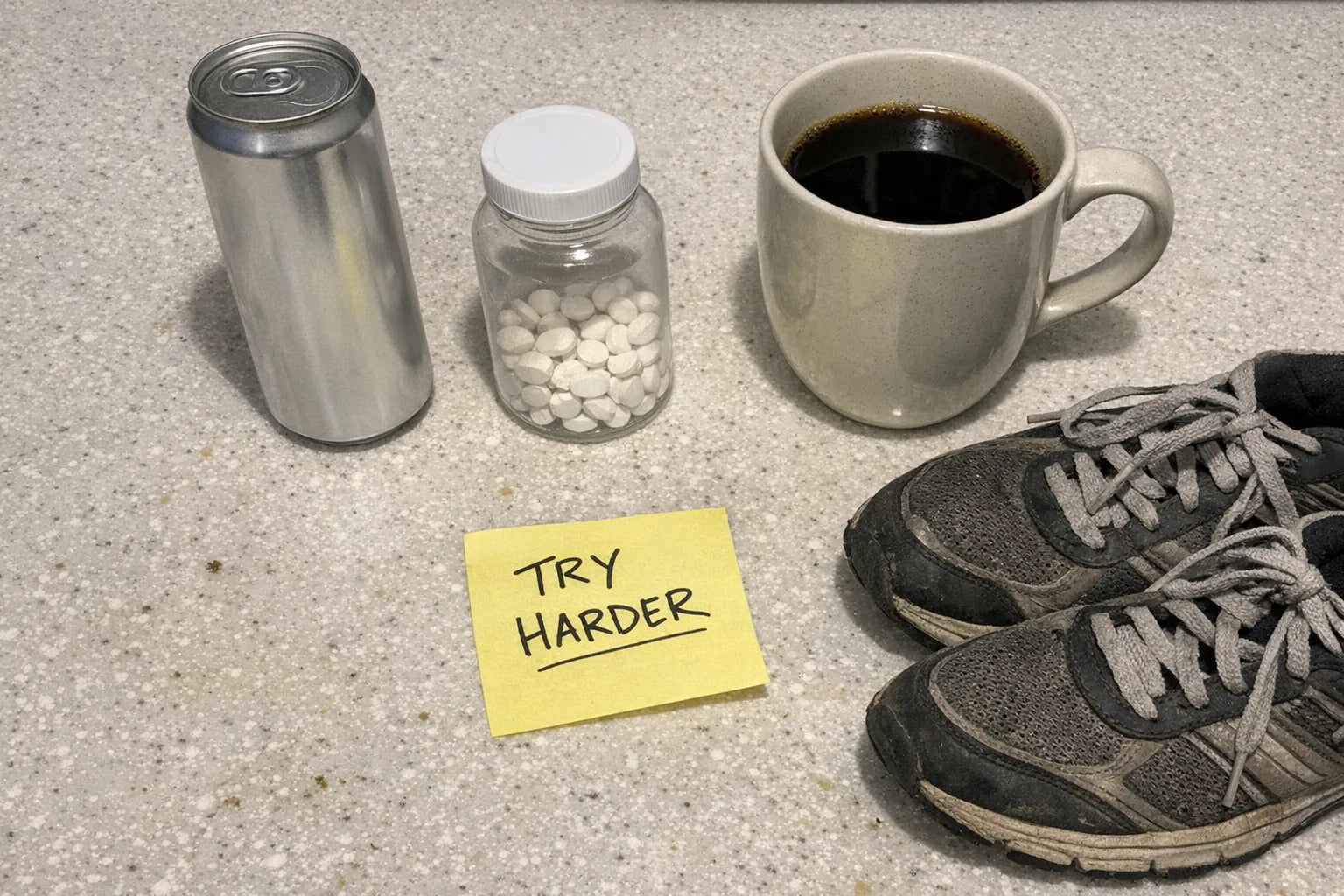
A bigger loan at a worse rate, where the tape gets thicker and the wave that hits you at 2pm gets bigger.
Same loan, same taped-over gauge, plus a pounding heart you never asked for.
If one cup already makes your chest race, this aisle was never even an option for you.
Genuinely useful if you're actually low on something.
But filling a gap you don't have does nothing for a stuck alarm or a slow drain.
Cruel advice for someone running on empty, because the energy to start is the exact thing you don't have.
The most expensive sentence in modern medicine.
It's a shrug dressed up as a diagnosis, and it sends people home to quietly accept a smaller life.
I've heard that sentence more times than I can count, and it still makes me furious.
Nobody ran a test and nobody looked at a mechanism.
Somebody looked at a birth year and closed the file.
Every one of those either borrows energy or ignores where your energy is going.
Not one of them works on the mechanisms.
So let me tell you where I went looking instead.
The Plants That Endure
We started Old World Healing on a simple idea.
The old world figured out an enormous amount about the human body, and then we mostly threw it away.
Our first product was a balm for aching joints, built from the kind of recipe your great-grandmother would have kept in a jar by the stove.
When I went hunting for energy, I went back to the same well.
And I found a pattern I've never been able to unsee.

The old-world healers didn't hand out the prettiest plants.
They handed out the ones that survive where nothing should.
Arctic root clinging to bare rock on Siberian cliffs, in wind that kills everything softer.
Ginseng growing slowly in the deep shade of Korean mountains, taking years to become anything at all.
The logic was almost childlike, and I think it was right.
Give the plants that endure to the people who have to endure.
The washerwomen and the farmers still working at 60, in bodies that wanted to quit at 45.

Then something happened that turned folk wisdom into a research program.
Soviet scientists spent decades studying exactly these plants, hunting for something that would help their people hold up under extreme stress.
They needed a word for a plant that helps the body handle a load rather than whipping it.
The word they landed on was adaptogen.
And here's what makes me want to shake people by the shoulders.
We now have modern, placebo-controlled human trials on these same roots.
Real trials, in real people, some of them the exact age you are right now.
Old world remedy. Modern science receipt.
That's the whole reason we make anything at all.
There Are Only Two Ways To Feel More Energy
Once I understood the mechanisms, the entire energy aisle split into two piles for me.
You can BORROW energy.
That's caffeine and every stimulant built like it.
Block the gauge, spike the stress hormone, feel great for 90 minutes, then pay it back tonight with interest.
Or you can BUILD energy.
That means working on the systems that decide how much energy your body makes and where it gets spent.
One is a loan.
The other is an income.
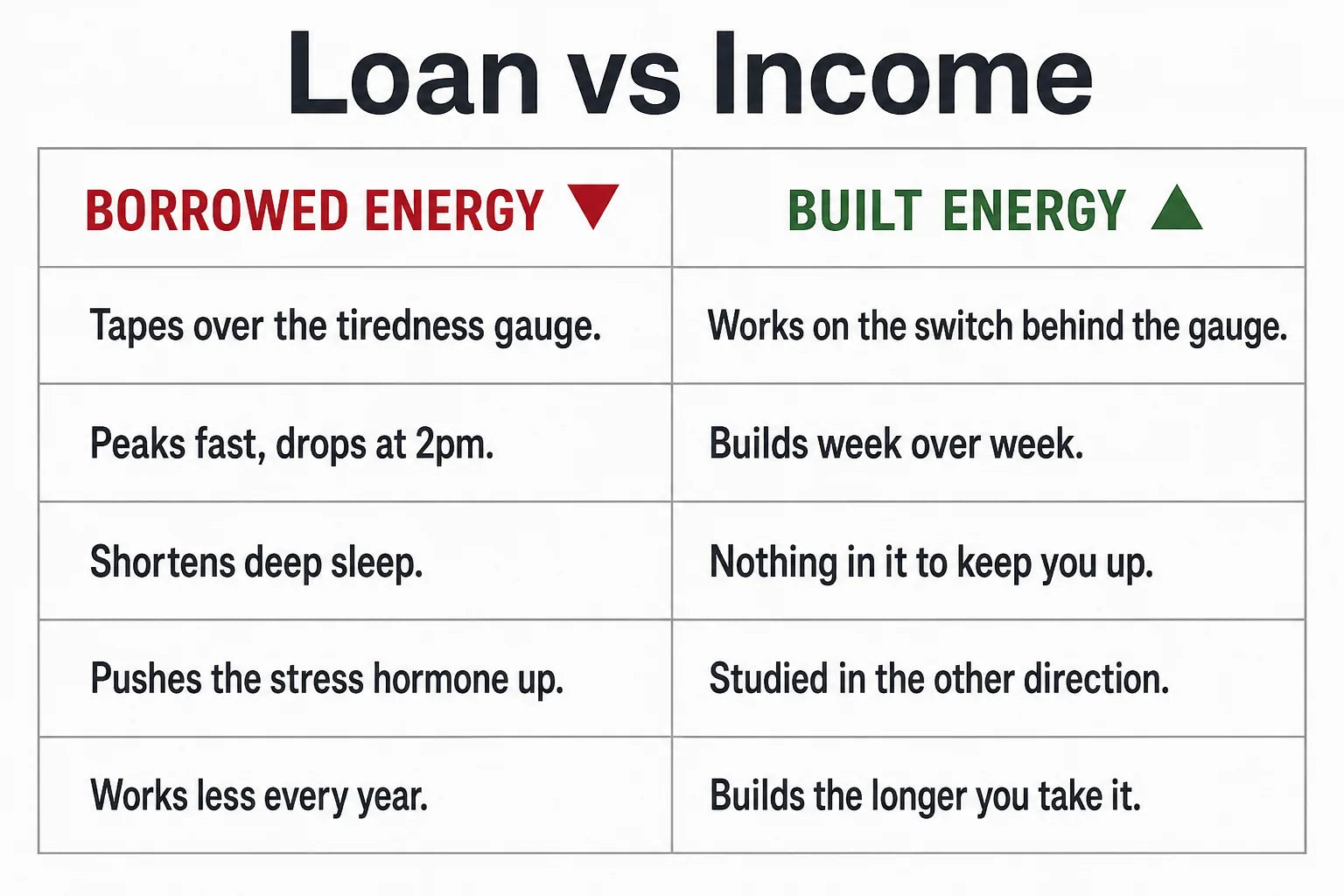
| Borrowed energy (caffeine) | Built energy (adaptogens) | |
|---|---|---|
| What it works on | Tapes over the tiredness gauge | Works on the stress switch behind the gauge |
| The curve | Peaks fast, then drops you at 2pm | Builds quietly, week over week |
| Tonight's sleep | Shortens it, and shortens the deep part5 | Nothing in it to keep you up |
| Your stress hormone | Pushes it up6 | Studied in the opposite direction |
| Over the years | Works less every year after 50 | Trained, so it builds the longer you take it |
Look at that bottom row for a second.
Caffeine is the only thing in your cupboard that gets WORSE at its job the older you get.
That's not a great thing to build your afternoons on.
The 4 Energy Boosters
So we built the other side of the ledger.
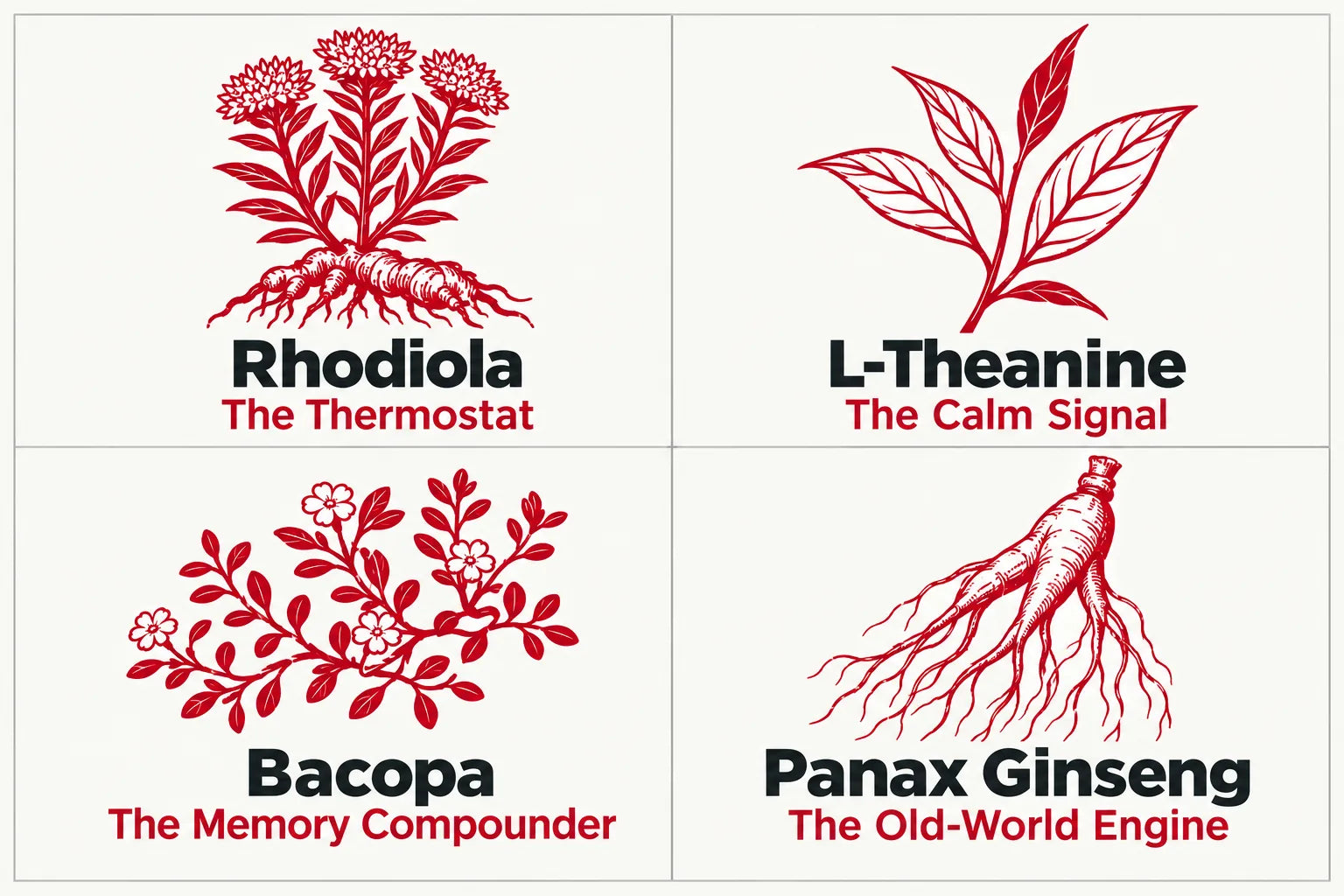
Four old-world botanicals, each one studied in humans, each one working on a different piece of the picture.
We call them the 4 Energy Boosters.
Booster 1: Rhodiola, The Thermostat
This is the arctic root off the Siberian cliff.
Caffeine works on the gauge.
Rhodiola was studied on the switch behind it.
In a randomized, double-blind, placebo-controlled trial, 60 adults with diagnosed fatigue syndrome took a rhodiola extract for 28 days.10
Against placebo, the researchers measured improvements in fatigue and in attention.10
And they measured one more thing.
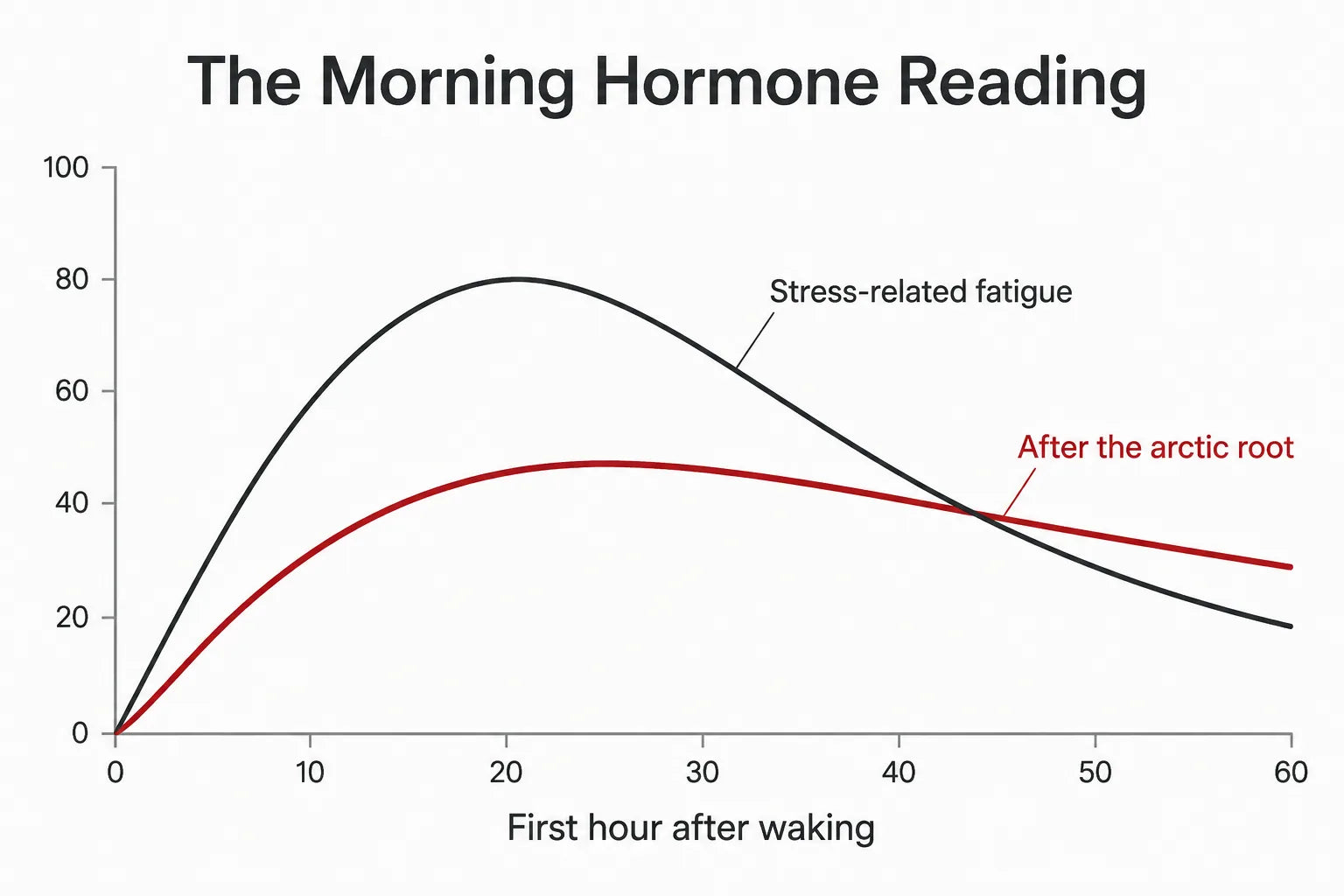
They measured the cortisol response to waking.
The exact same measurement that shows up abnormal in people who wake up already drained.
That's the bridge I promised you earlier.
The fingerprint of the problem and the fingerprint of the evidence are the same reading.
Two larger studies followed people with burnout symptoms and prolonged fatigue for 8 and 12 weeks.11 12
Both saw the largest improvements in exhaustion and concentration, and in both, the biggest single shift showed up inside the first week.11 12
I'll be straight with you about our dose in a minute, because that matters and most companies won't say it out loud.
Booster 2: L-Theanine, The Calm Signal
This is the ingredient that answers the question you've been holding since the headline.
"No caffeine? Then how would I feel anything at all?"
Here's how.
L-theanine is an amino acid found in tea leaves, and it does something you can literally watch on a brainwave reading.
In controlled EEG studies, 50 to 200 mg of L-theanine increased alpha-wave activity within about 30 to 60 minutes.13
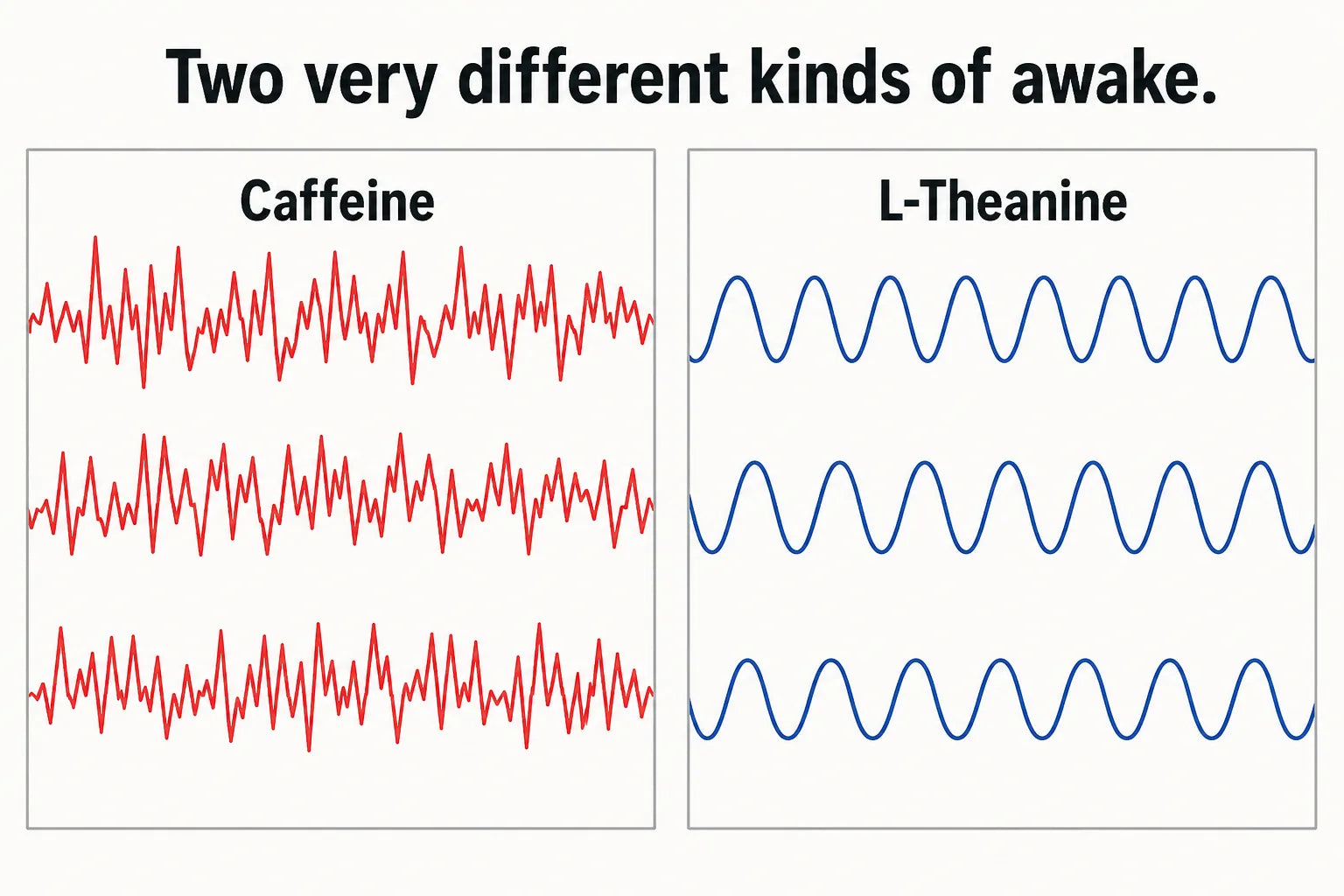
Alpha waves are the signature of relaxed alertness.
It's the brain state of deep reading, or light meditation.
Awake and clear, but not braced.
Your brain on theanine looks like a meditator's brain, not a caffeinated one.
And there's no drowsiness in that state, which is the point.
Our formula uses 100 mg of L-theanine.
That is squarely inside the studied range, and a separate 100 mg EEG study found theanine shifting the alpha activity tied to attention.14
This is the "I actually feel something" ingredient, and it's the one you're most likely to notice in week one.
Booster 3: Bacopa, The Memory Compounder
Bacopa is the herb Ayurvedic scholars used, and it has the strongest research match to your exact age group of anything in the formula.
A meta-analysis pooled 9 randomized controlled trials covering 437 people.15
The most consistent finding across all of them was faster speed of attention.15
That's the "pulling the right word out at the right moment" feeling.
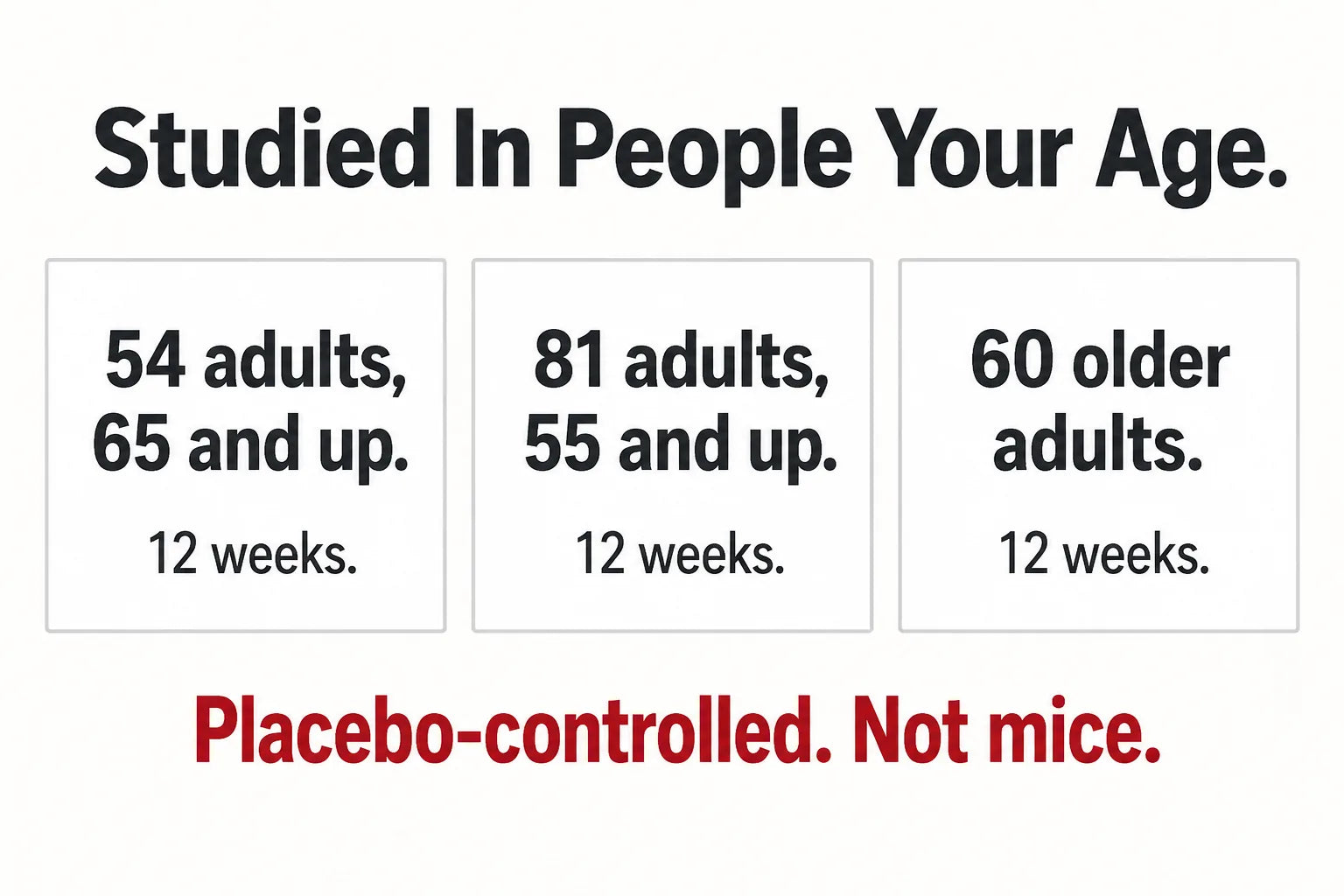
Then look at who the individual trials tested.
54 healthy adults aged 65 and up, average age 73, for 12 weeks.
Delayed word recall improved against placebo.16
81 older adults aged 55 and up, for 12 weeks.
Verbal learning and delayed recall significantly improved.17
60 older volunteers, 12 weeks.
Working memory improved, and the researchers recorded faster neural processing.18
Notice the number that repeats in every one of those.
Twelve weeks.
Bacopa doesn't spike.
Bacopa compounds, which is the exact opposite of what a stimulant does to you.
Booster 4: Panax Ginseng, The Old-World Engine
Ginseng has been used for roughly 2,000 years in Chinese and Korean tradition, which is a longer track record than almost anything in your medicine cabinet.
Modern research backs the direction.
A meta-analysis of ginseng trials found a statistically significant reduction in fatigue against placebo.19
And a placebo-controlled trial in 90 adults with persistent fatigue found reduced mental fatigue scores.20
Ginseng is the supporting player here, and I'm not going to pretend otherwise.
It's in the formula because it belongs in the old-world engine room, not because it's carrying the load alone.
And The Raw Material
The formula also carries 540 mg of branched chain amino acids.
They're building blocks your muscles and your brain chemistry use.
That's the whole claim I'm making about them, and I'll explain why in about thirty seconds.
The Part Most Supplement Companies Leave Out
I'm going to do something here that our marketing person will not enjoy.
I'm going to tell you exactly where our formula does NOT match the research.
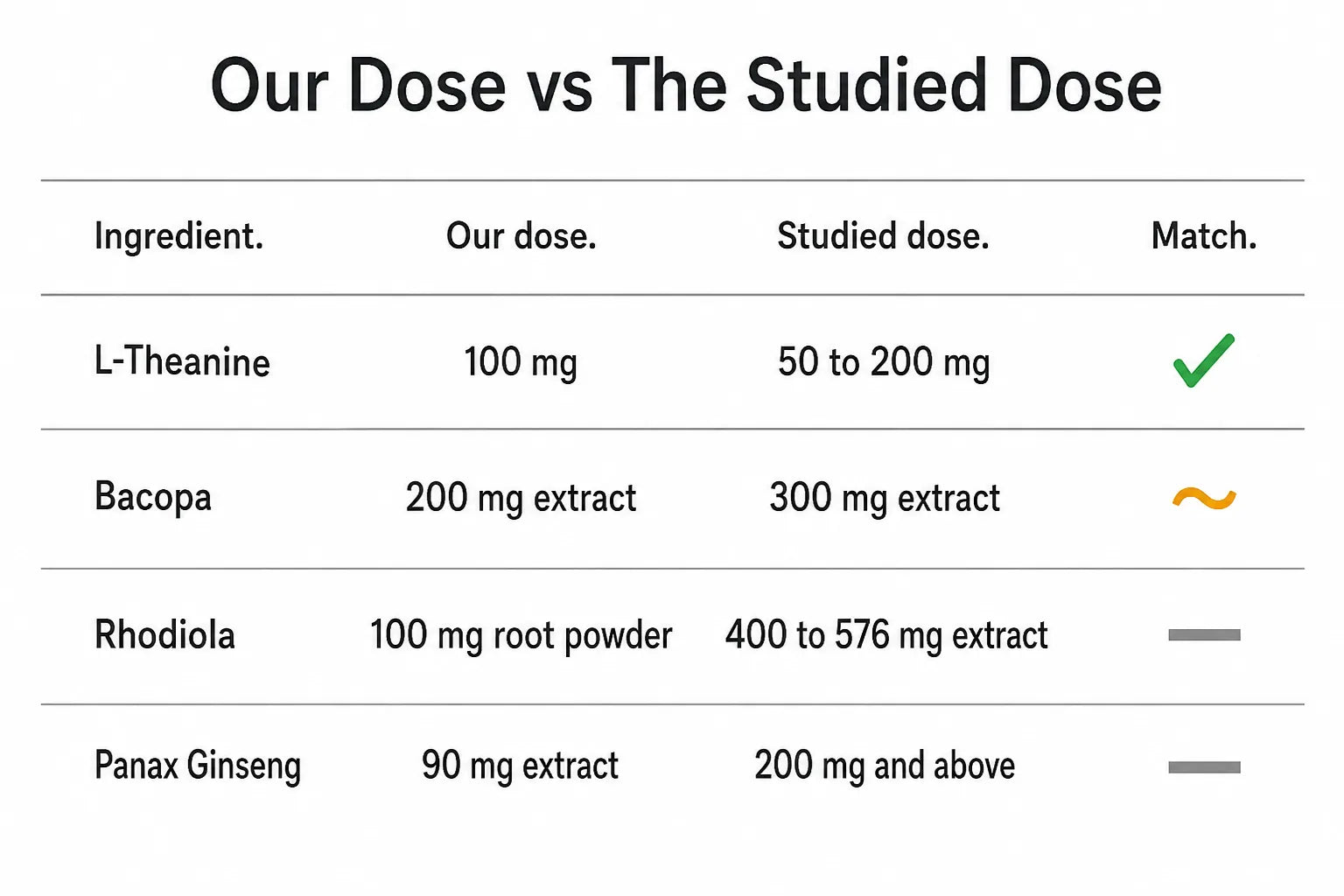
The EEG studies ran at 50 to 200 mg, so we're sitting dead center in the studied range.
That's the cleanest match in the whole formula.
The 12-week trials in adults 55 and over used 300 mg of the same kind of extract.
We're at about two thirds of that, so I'll tell you what the research showed at 300 mg and stop right there.
I'm not going to pretend we ran their protocol.
The burnout and fatigue trials used 400 to 576 mg of concentrated extract, which is a good deal stronger than raw powder.
Rhodiola is in here for the mechanism it works on and the old-world story it carries.
I will never tell you our 100 mg reproduced those trials, because it flat out didn't.
Below the doses used in the fatigue trials, which is exactly why I called it a supporting player.
The central-fatigue research used six to twenty grams, so we're more than ten times below it.
We make no performance claim on them at all, and they stay raw material.
Now, why on earth would I print that?
Because you've been burned before.
You've bought the bottle with the shouting label and felt absolutely nothing, and it made you cynical about the whole aisle.
The honest version is the only version worth your money.
We sell the system and the mechanism.
We don't sell you a promise that our formula is secretly a clinical trial.
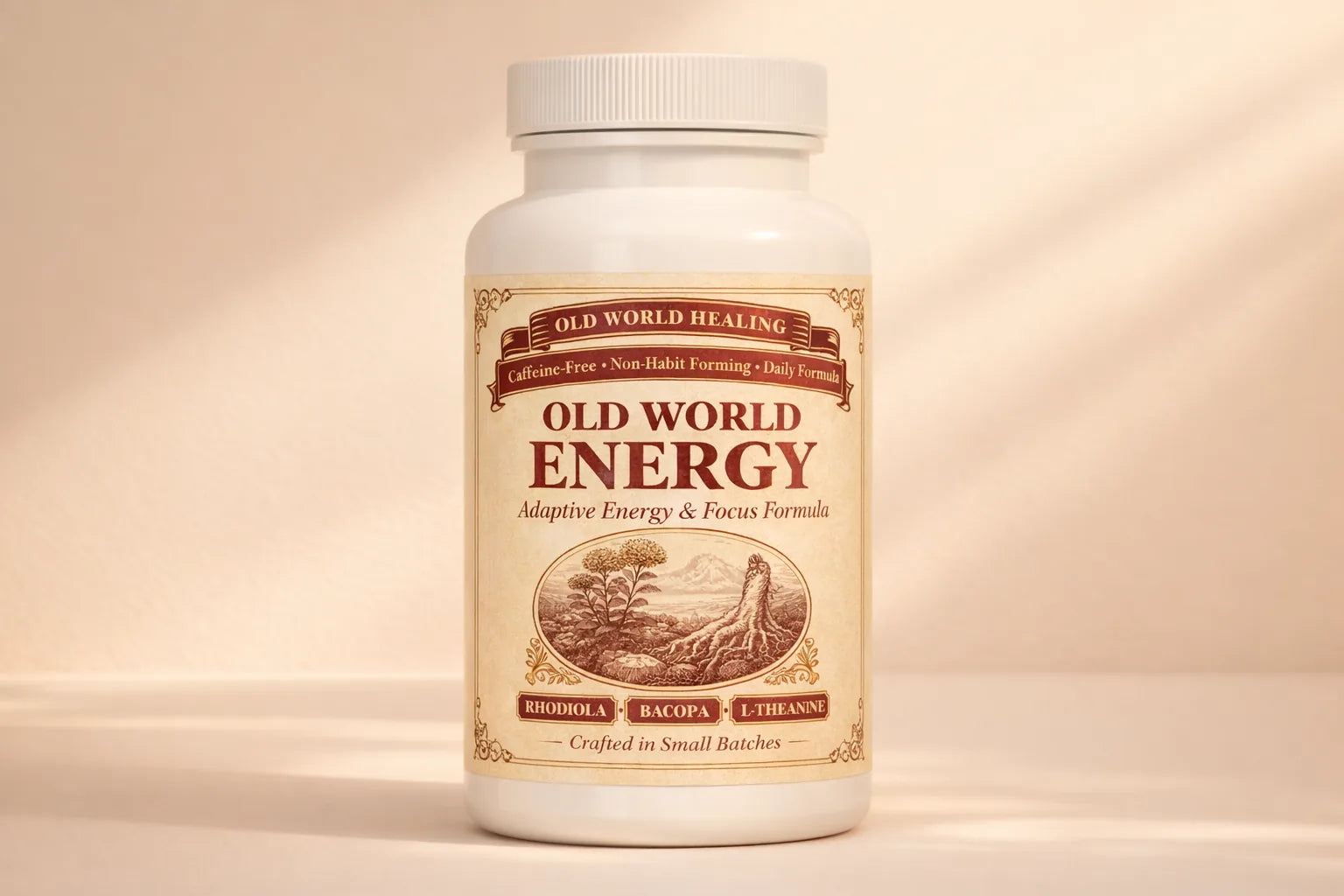
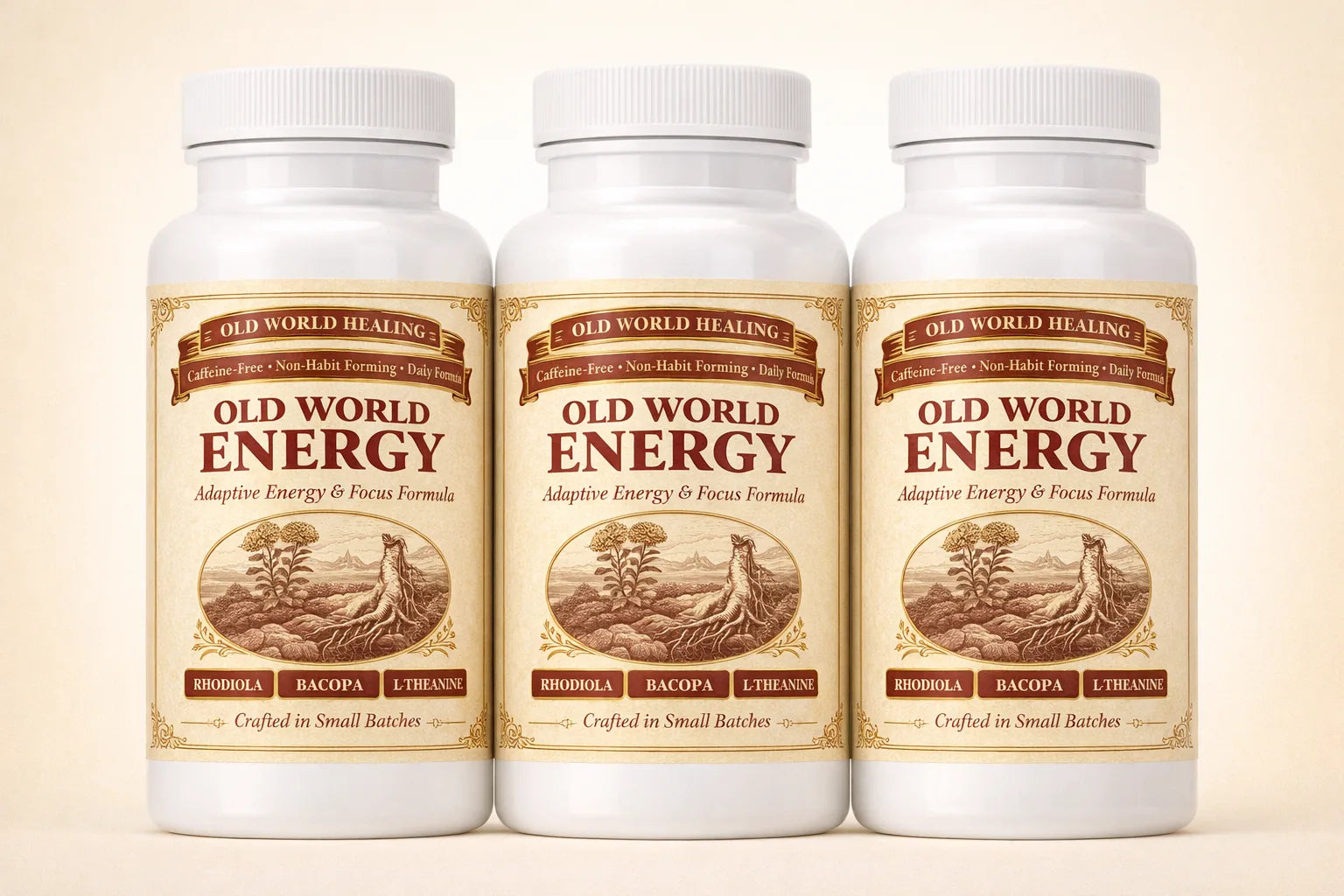
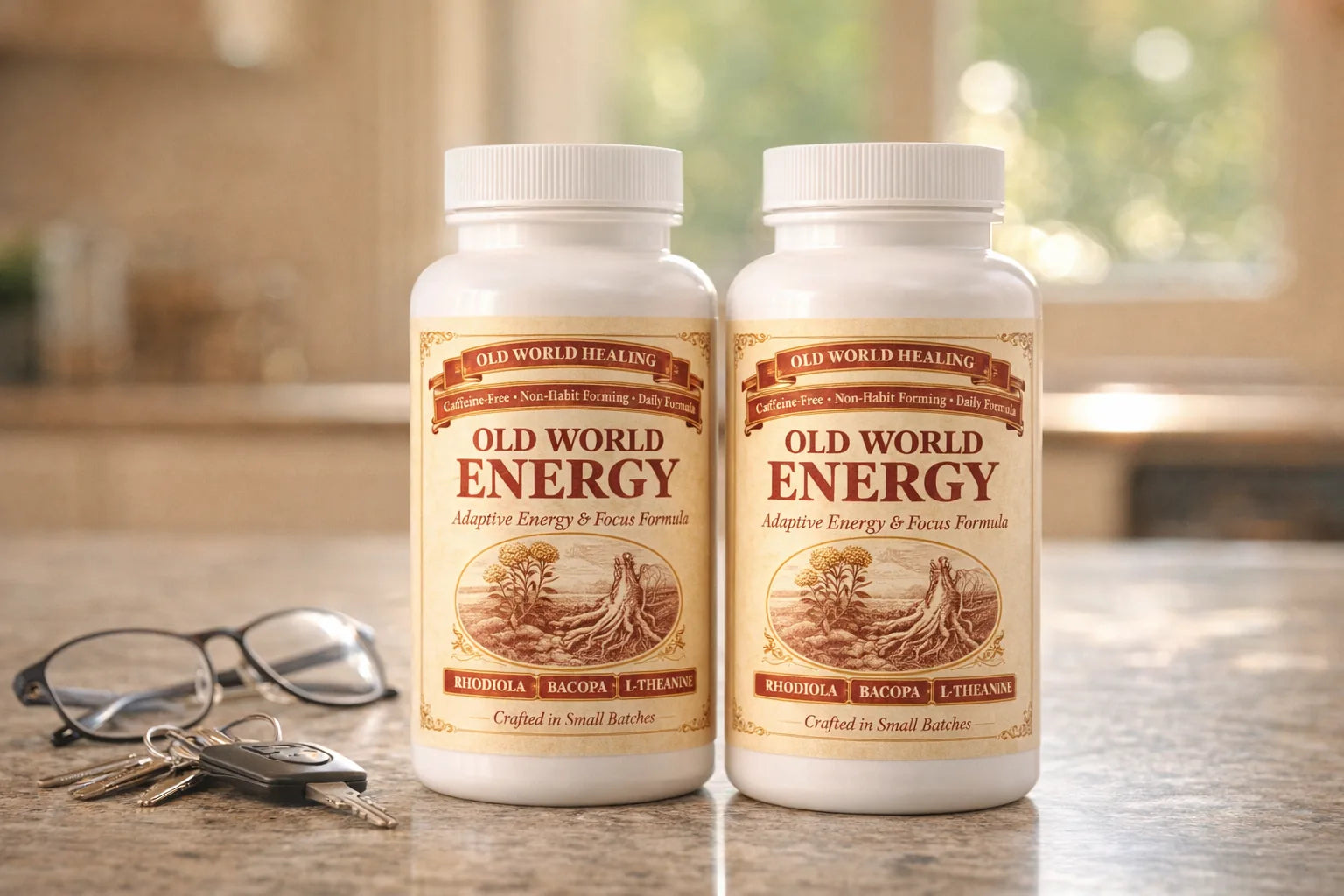
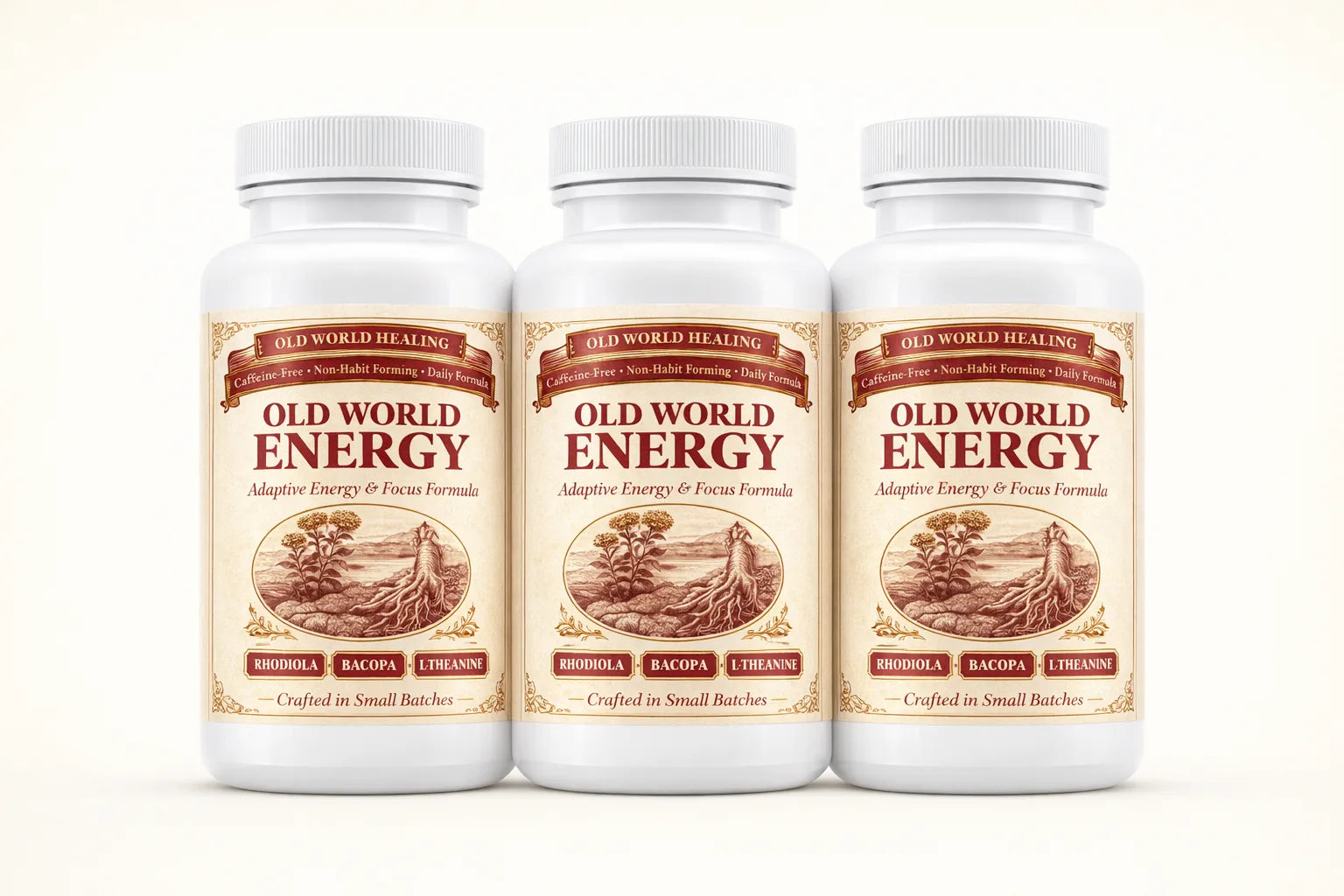
Old World Energy
So here's what we made.
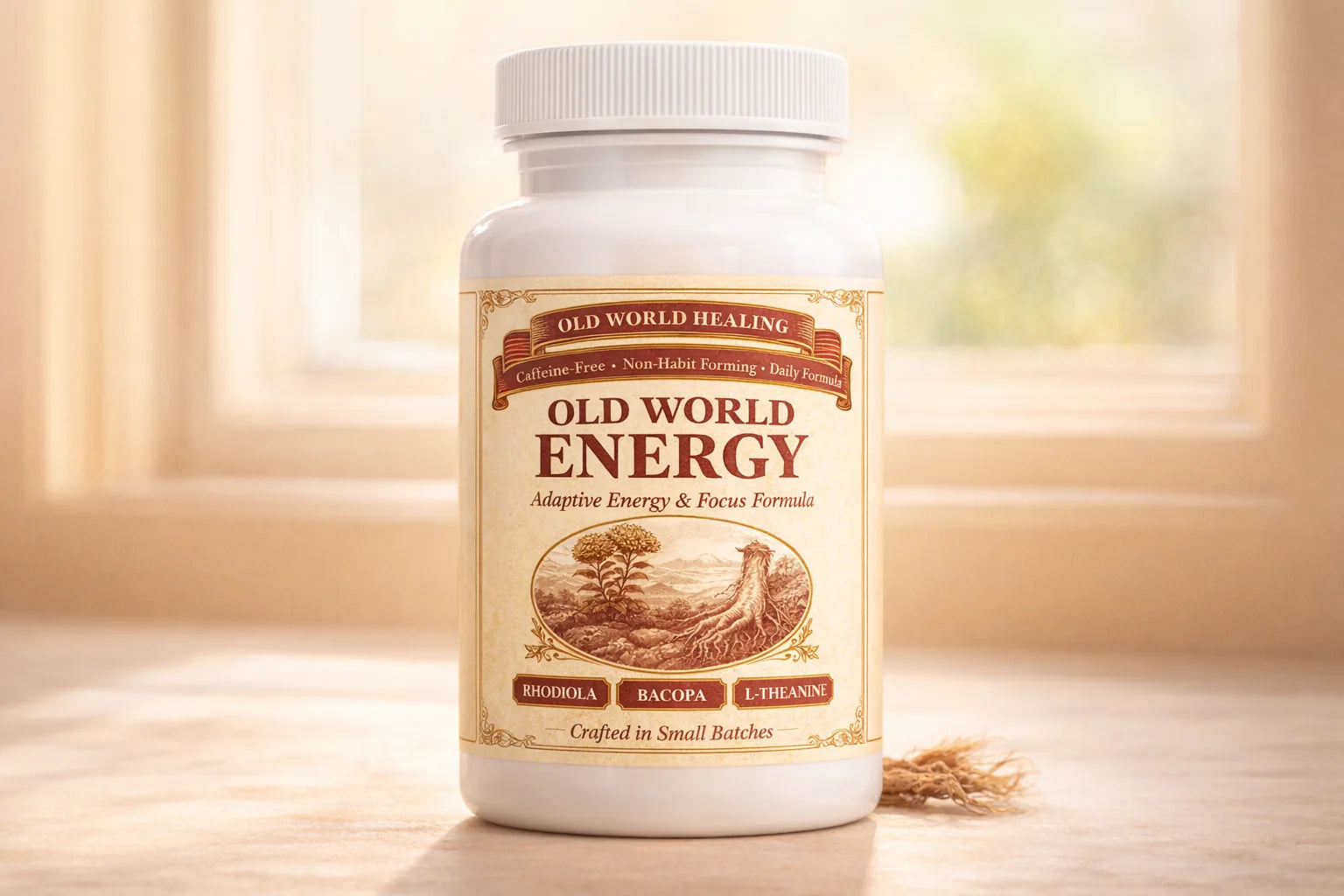
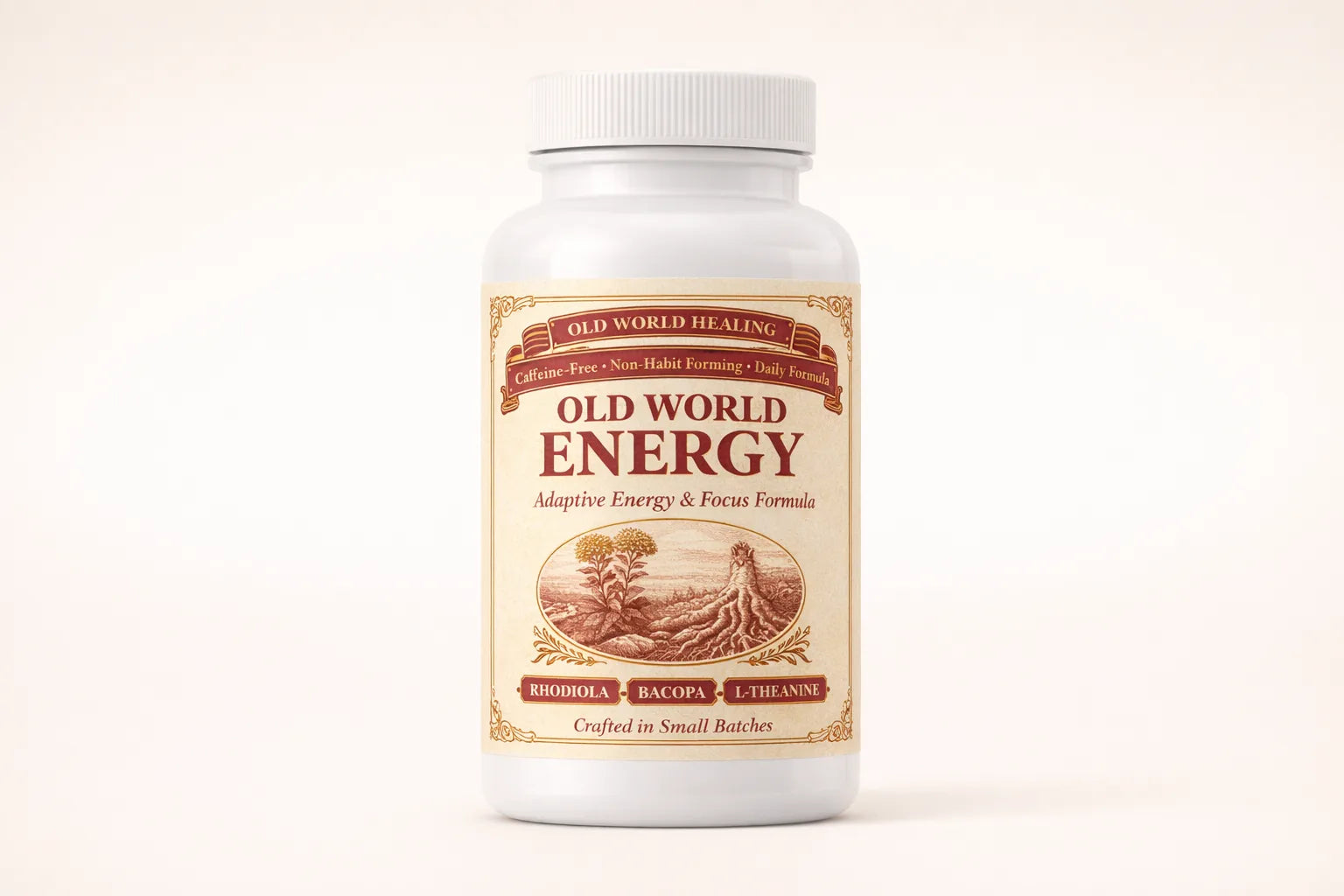
Sixty capsules in the bottle, which is a thirty-day supply.
Two capsules a day with an 8 oz. glass of water, ideally 20 to 30 minutes before a meal.
A daily formula built on the 4 Energy Boosters.
Rhodiola for the stuck switch, and L-theanine for the calm signal you can feel in the first week.
Bacopa for the slow compounding, and ginseng down in the old-world engine room.
And here is the part that matters most for you, because I know how you feel about stimulants.
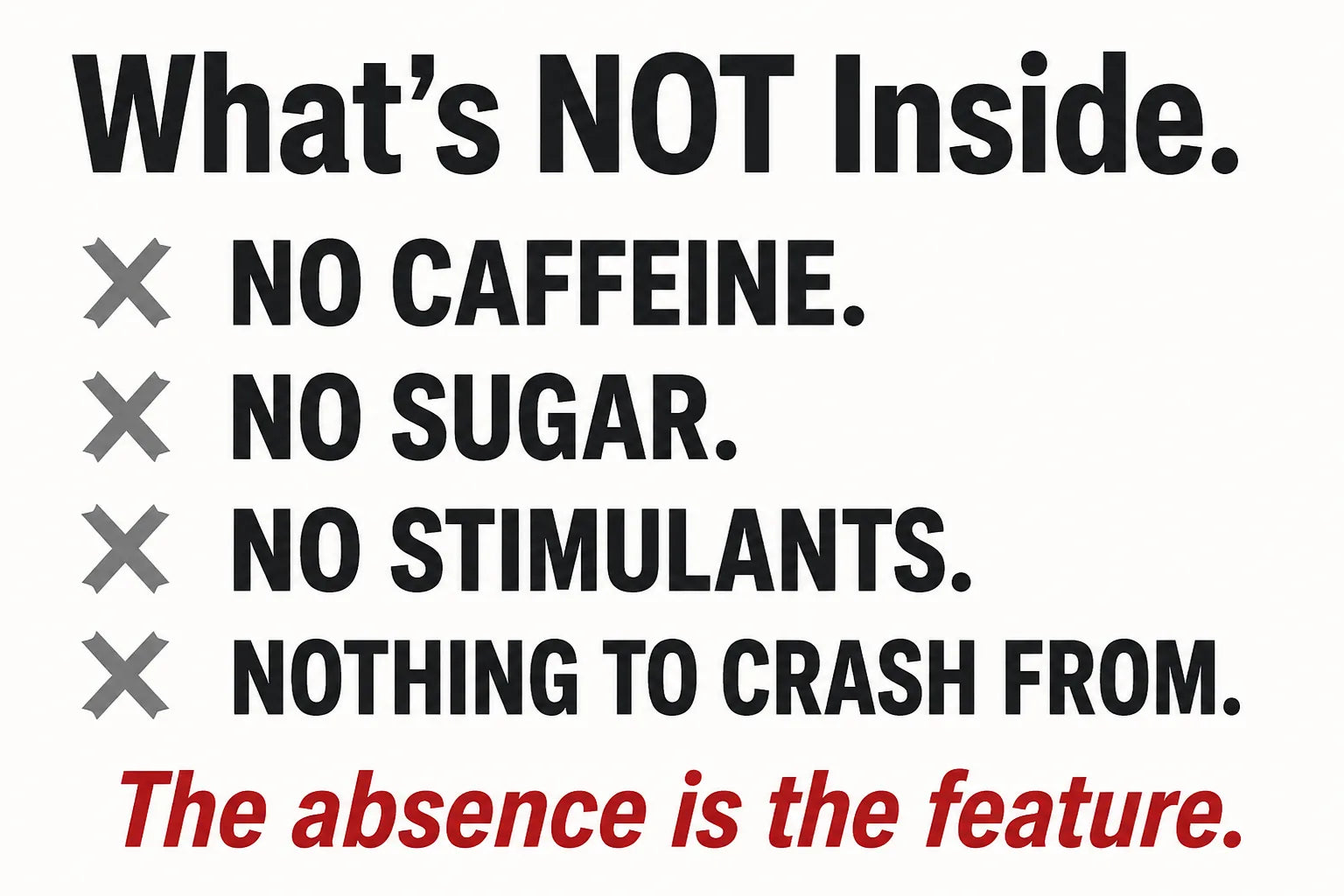
No caffeine, no sugar, no stimulants.
Nothing in there that can race your heart, and nothing in there that can take tonight's sleep away from you.
For most of the energy aisle, taking the stimulant out would be a compromise.
For you, it's the entire point.
You're not looking for a bigger loan, you're looking for a way to stop borrowing.
What To Actually Expect, Week By Week
I'd rather you have honest expectations than an exciting lie, so here's the real timeline based on what the research on these botanicals shows.
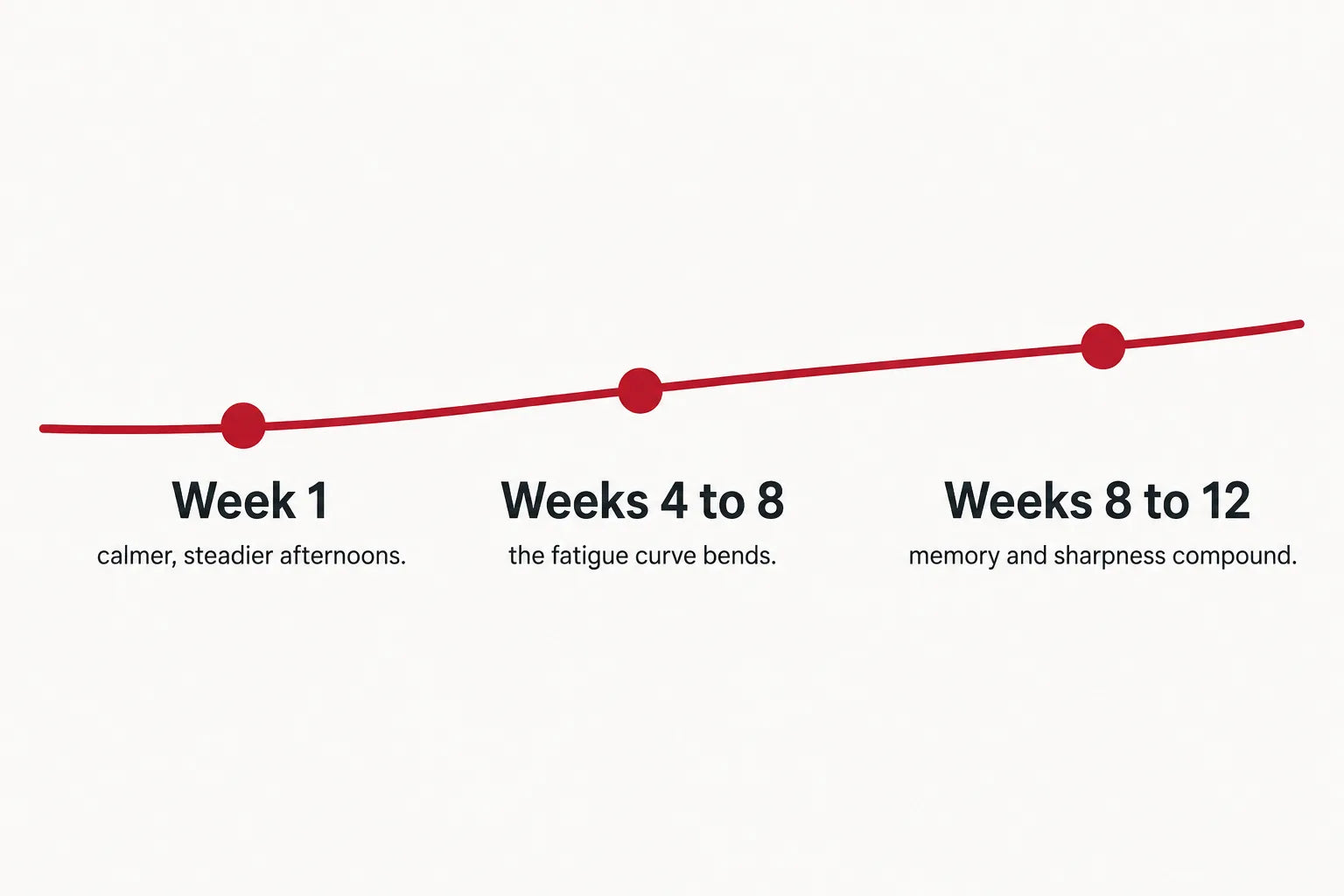
Theanine works the same day, and the rhodiola trials saw their biggest shift inside the first week.11 12
What people describe first isn't a jolt, it's a calmer and steadier afternoon.
The wall just isn't where it usually is.
This is where the fatigue curve tends to bend.
Less bargaining with yourself about whether you've got the energy left for the evening.
This is Bacopa's window, and it's the one that showed up in every single trial I cited above.
Memory and mental sharpness compound.
Which brings me to the single most important sentence in this whole article.
Adaptogens are trained, not taken.
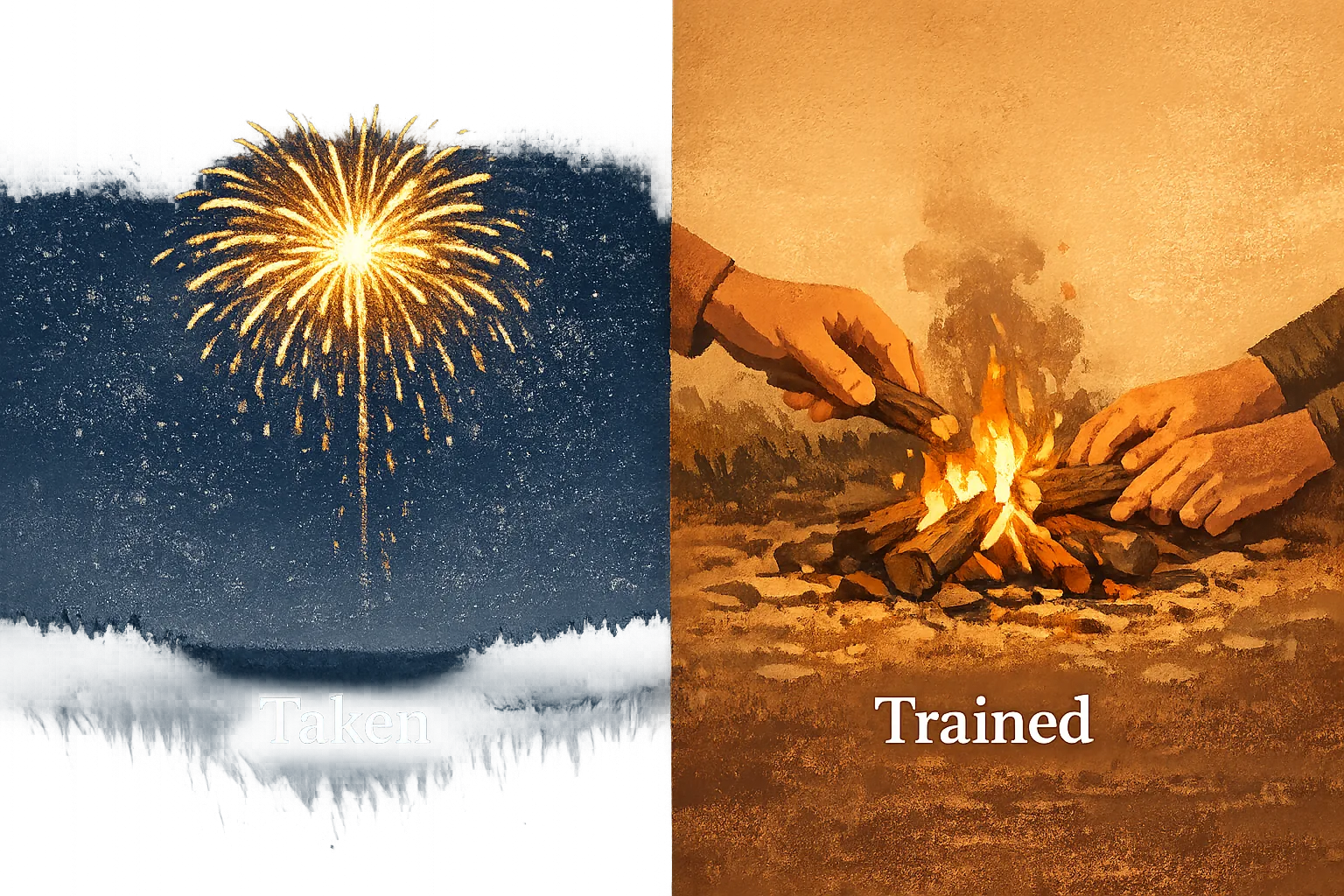
A stimulant is taken.
You swallow it, you get the effect, the effect leaves, and you're right back where you started.
An adaptogen is trained.
You're not buying an afternoon here, you're building a baseline.
That's why 12 weeks keeps showing up in the research, and it's why the people who feel the most are always the people who stayed consistent.
If you want the honest sales pitch, that's it.
Take it daily and let it build.
What This Actually Looks Like In A Real Week
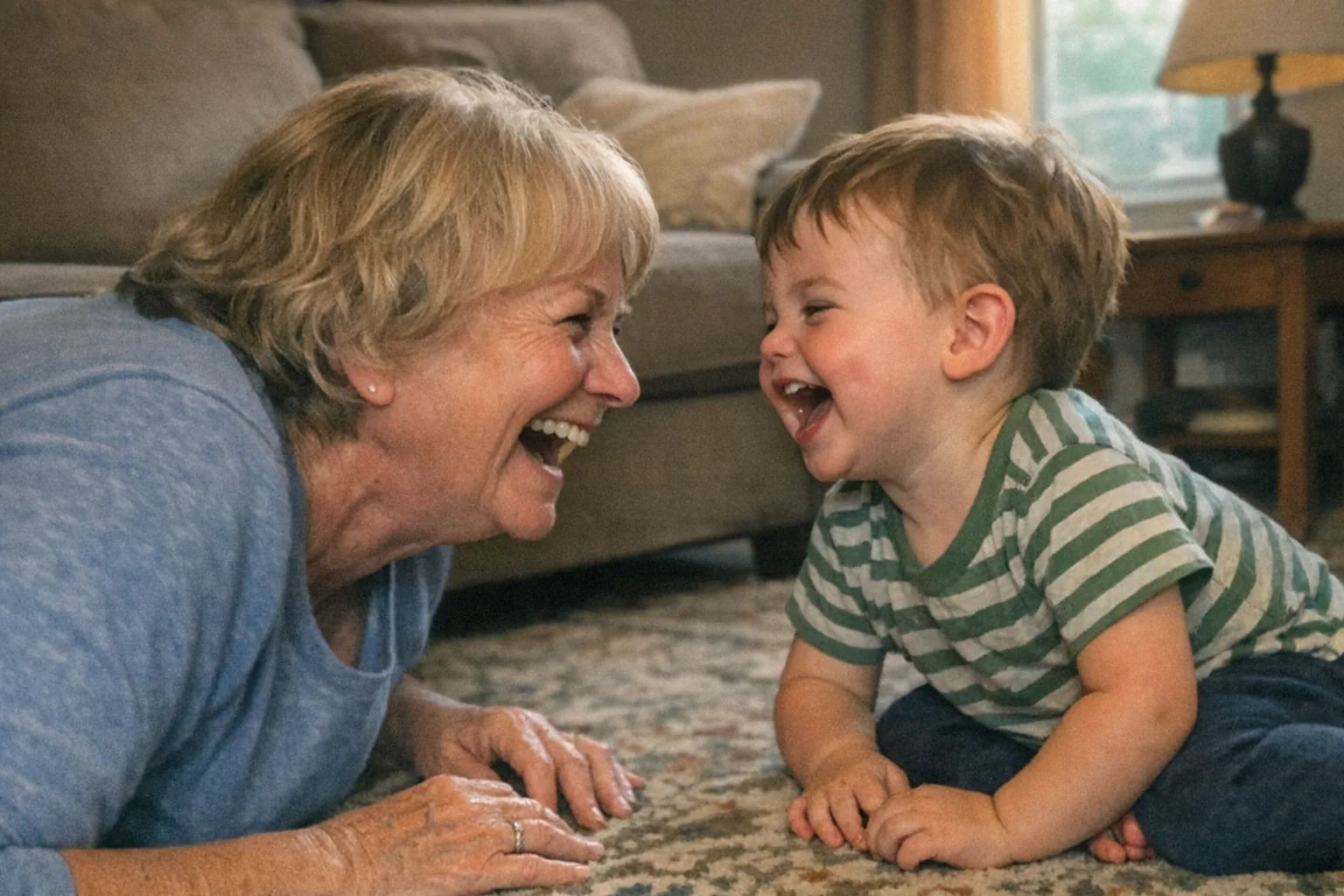
A Note On Proof
You may already know us.
Old World Healing started with Old World Relief, our topical cream.
More than 47,000 jars have gone out the door, with a 4.8 rating and over 2,800 five-star reviews.
Old World Energy is new, so the accounts below are illustrative rather than customer reviews.
Illustrative story
"I stopped bargaining with my afternoons."
"The first week wasn't dramatic and I'm glad, because dramatic is what coffee does and I hate what coffee does to me now. It was more that four o'clock arrived and I hadn't thought about it. I used to spend the whole morning quietly rationing myself for the afternoon. Around week five I noticed I'd stopped doing the math."
Illustrative story
"I said yes before I checked how I felt."
"My daughter asked about a weekend at the lake and I said yes right there on the phone. That's not how I've answered a question like that in about four years. I'd always say let me see how I'm doing that week, and then I'd cancel. Two months in, I said yes first and it just wasn't a lie."
Illustrative story
"The word came back."
"The energy part I expected. The part I didn't expect showed up somewhere around the third month, and it was the words. Standing in a conversation and having the name right there when I wanted it, instead of the awful pause where everyone waits for me. I hadn't realized how much I'd started avoiding talking."
These are illustrative accounts. Individual results may vary.
Getting Started With Old World Energy
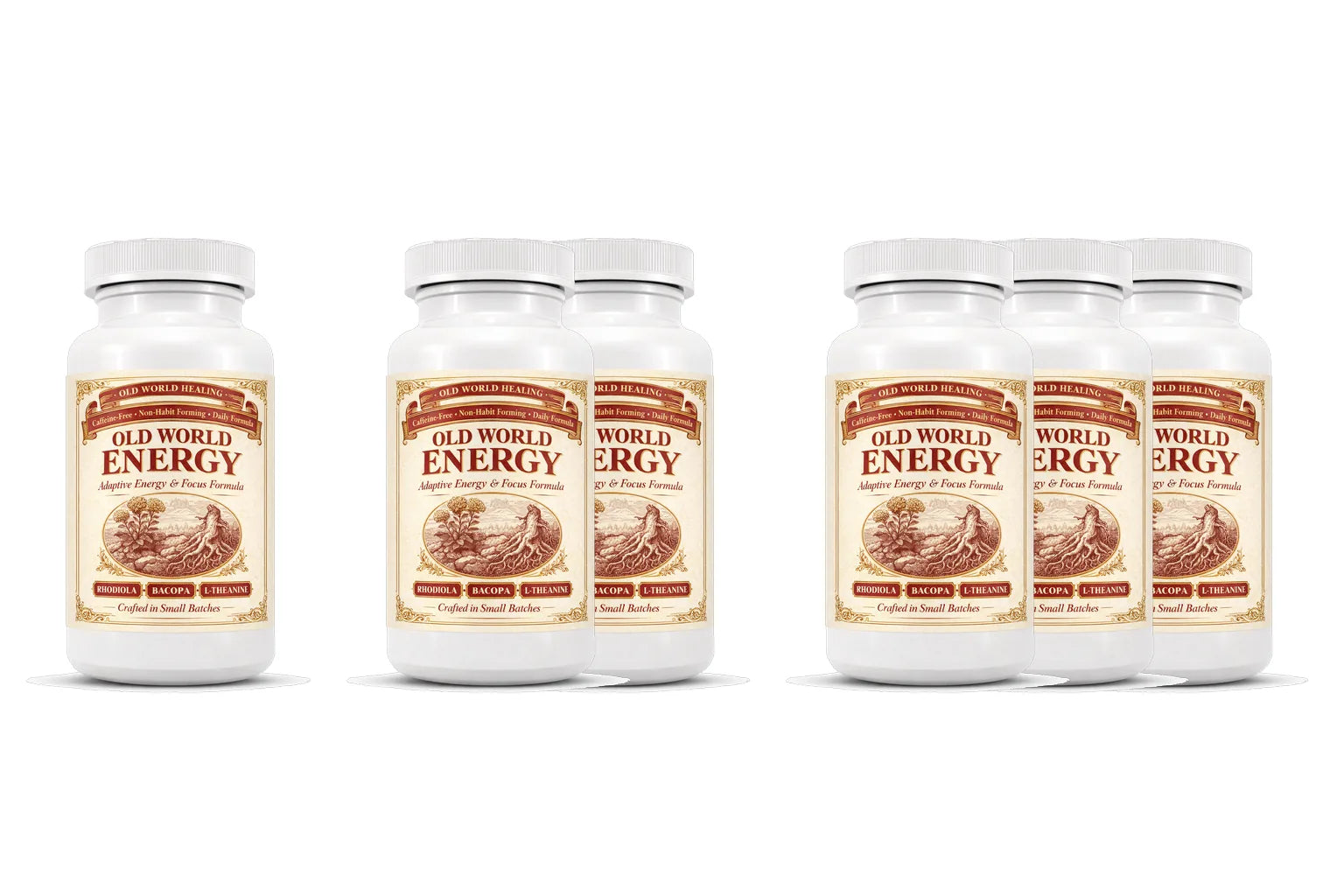
Old World Energy comes two ways, and you're the one who picks.
You can buy it once, or you can subscribe and save $10 every month.
Choose your plan
- Subscribe and save $10 every month, and a longer supply saves again on top of that.
- Every subscription renews at the same price you started at, with no intro rate and no step-up later.
- Shipping is free on every order, whichever way you buy.
- You can cancel anytime before your next ship date, with no fee and no phone call.
- 90-day money-back guarantee on both, full refund, and there's no need to send the bottle back.
Because these botanicals build over weeks rather than hours, most people start with enough to get through the window where the research says the changes show up.
That's the 12-week mark, not the 12-hour mark.
Which is exactly what the three-month plan is: the full 12-week block in one order, at $129 on a subscription, or $43.00 a month.
I know twelve weeks sounds like a long time to give something before you judge it.
That's why the guarantee runs 90 days, so the window you get to decide in is the same window the research measured at.
If it isn't working, email us inside 90 days and we refund you in full, and you keep the bottle.
That guarantee covers both the one-time order and the subscription.
Two Versions Of Next Spring
I want you to picture two different versions of the same afternoon, twelve weeks from now.

Version one. Nothing changes.
The coffee keeps working a little less every year, because that drain keeps slowing.
You keep paying for each afternoon with a piece of the following night.
And the calendar keeps shrinking, one polite no at a time, until the people who love you stop asking because they already know the answer.
That's the real cost of borrowed energy.
The cost was never money.
The cost is the afternoons you weren't standing in.
Version two. You stop borrowing and start building.
Week one, the wall gets softer.
By week six, you're not planning your day around running out.
By week twelve, you're the one on the floor with the grandkids, and you're the last one who wants to stop.
Nobody makes a speech about it.
You just quietly get your yes back.
Questions People Ask Us

That question is the whole reason the L-theanine is in there at our exact studied dose.
Caffeine never created energy for you in the first place, it only hid the gauge.
What theanine does is measurable on a brainwave reading within 30 to 60 minutes, and it looks like calm alertness rather than a jolt.13
Most people describe the first week as an afternoon that simply doesn't fall off a cliff.
Honestly, that skepticism is healthy and I'd rather you keep it.
The difference I'd point to is that we told you the dose gaps in our own formula, on our own sales page, before you asked.
Read that dose comparison again and judge us on it.
Week one for the calm-alert piece, based on theanine's same-day evidence and the week-one shifts in the rhodiola trials.11 12 13
Weeks four to eight for the fatigue curve.
Weeks eight to twelve for memory and sharpness, which is where every Bacopa trial I cited landed.16 17 18 Results vary from person to person.
Old World Energy has nothing in it that clashes with caffeine.
But now you know what that slow drain is doing, so I'd think hard about the afternoon cup specifically.
The one that used to be harmless at 35 is the one buying tonight's deep sleep on credit.
There's no caffeine and no stimulant in the formula, so there's nothing in it built to keep you awake.
Please talk to your doctor or pharmacist before starting any new supplement, especially if you take prescription medication.
Our label specifically flags blood thinners and medication for blood sugar or blood pressure.
That's not a dodge, it's just the right answer.
Because it's the same job.
We started Old World Healing to bring back old-world remedies and hold them up to modern science.
First your joints. Now your afternoons.
Two capsules daily with an 8 oz. glass of water, ideally 20 to 30 minutes before a meal.
Sixty capsules in a bottle, so one bottle is thirty days.
Take them every day, because these botanicals are trained, not taken.
You have 90 days, and if it isn't working you email us inside that window for a full refund.
We picked 90 days on purpose, because it covers the whole 12-week timeline the Bacopa trials measured at.
There's nothing to ship back, so you keep the bottle either way.
Pick one month at $49, two months at $89, or three months at $129, and it renews on that same cadence at that same price.
Shipping is free every time, and you can cancel before your next ship date whenever you want.
Yes, and the one-time price is $59 for one month, $109 for two months, or $159 for three months.
The subscription is $10 a month lower, and the 90-day guarantee covers both.
You Don't Need More Coffee. You Need To Stop Paying Interest.
Here's everything I've told you, in four lines.
One enzyme in your liver slowed down, so your coffee now lingers into the night and steals the deep sleep that was supposed to reset you.1 2 5
A stress switch that never fully shuts off is spending your energy on an alarm instead of on your life.
Your cellular batteries make a little less than they used to.8 9
And not one cup of coffee in the world touches any of that, because coffee was never income.
Coffee was always a loan.
Stop borrowing.
Start building.
Since this article went up, the question we get asked most is whether twelve weeks is really necessary before you judge it.
It is, and that's exactly why the guarantee runs 90 days instead of 30.
P.S. If you only remember one thing from this whole article, make it the difference between a loan and an income.
Every cup of coffee after 50 is borrowed against a night you haven't had yet, and the interest rate goes up every year, because the enzyme that clears it keeps slowing down.1 2
The 4 Energy Boosters work the other side of that ledger.
P.P.S. The reason to start today rather than "sometime this fall" is that these botanicals are trained, not taken.
The Bacopa trials I cited measured their results at twelve weeks.16 17 18
Twelve weeks from today is a real date on your calendar, and you get to decide right now which version of that afternoon you're standing in.